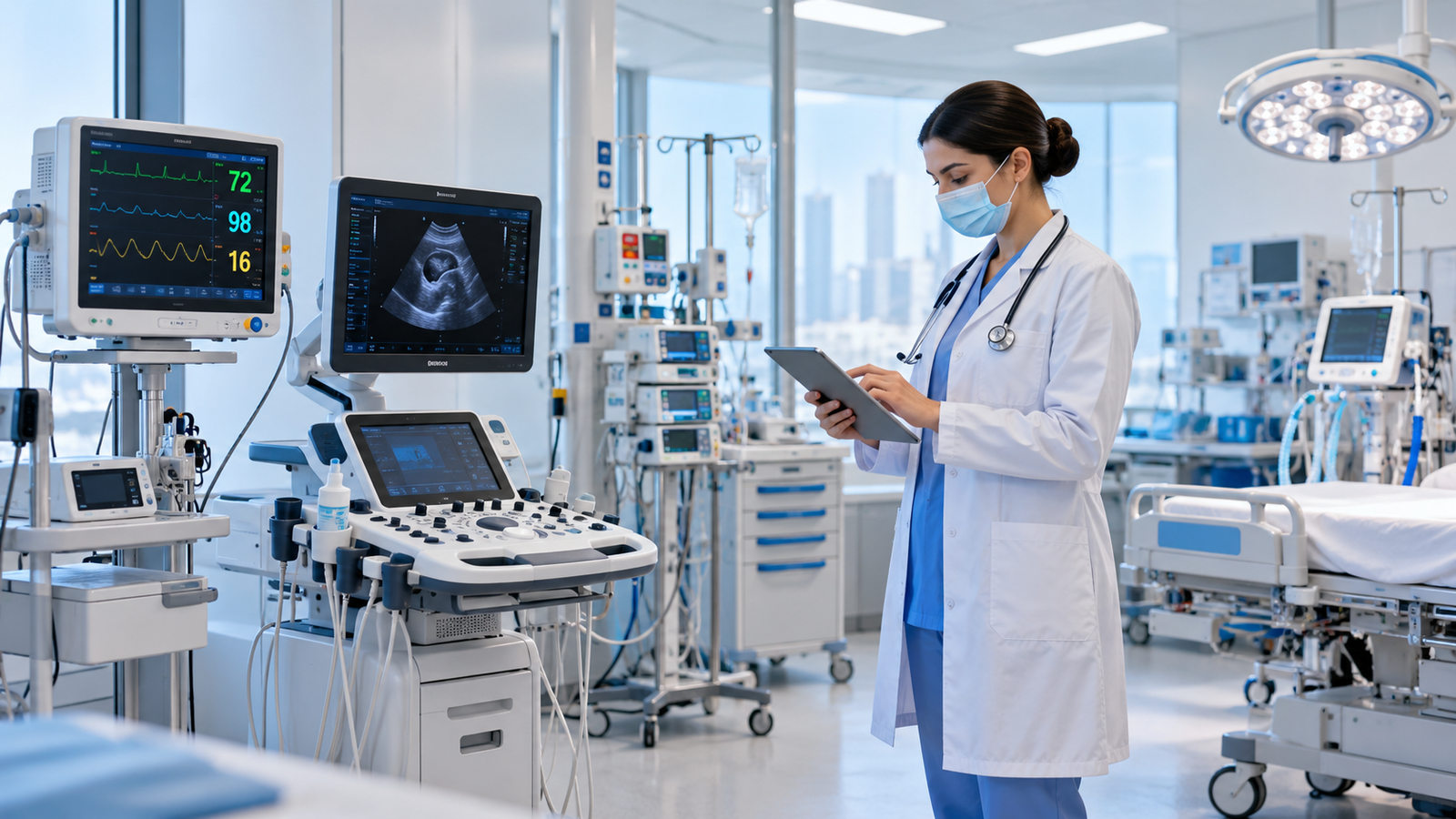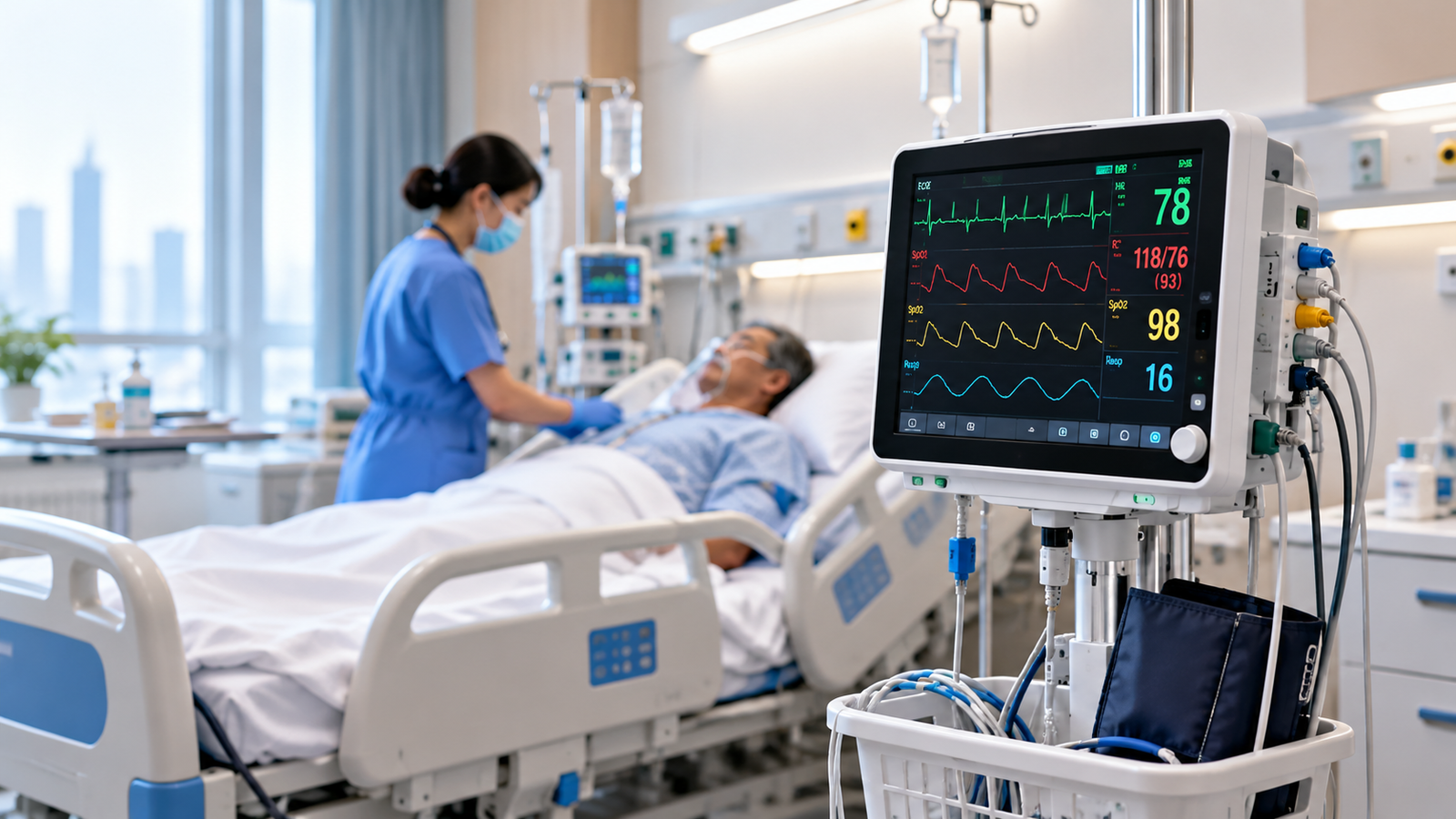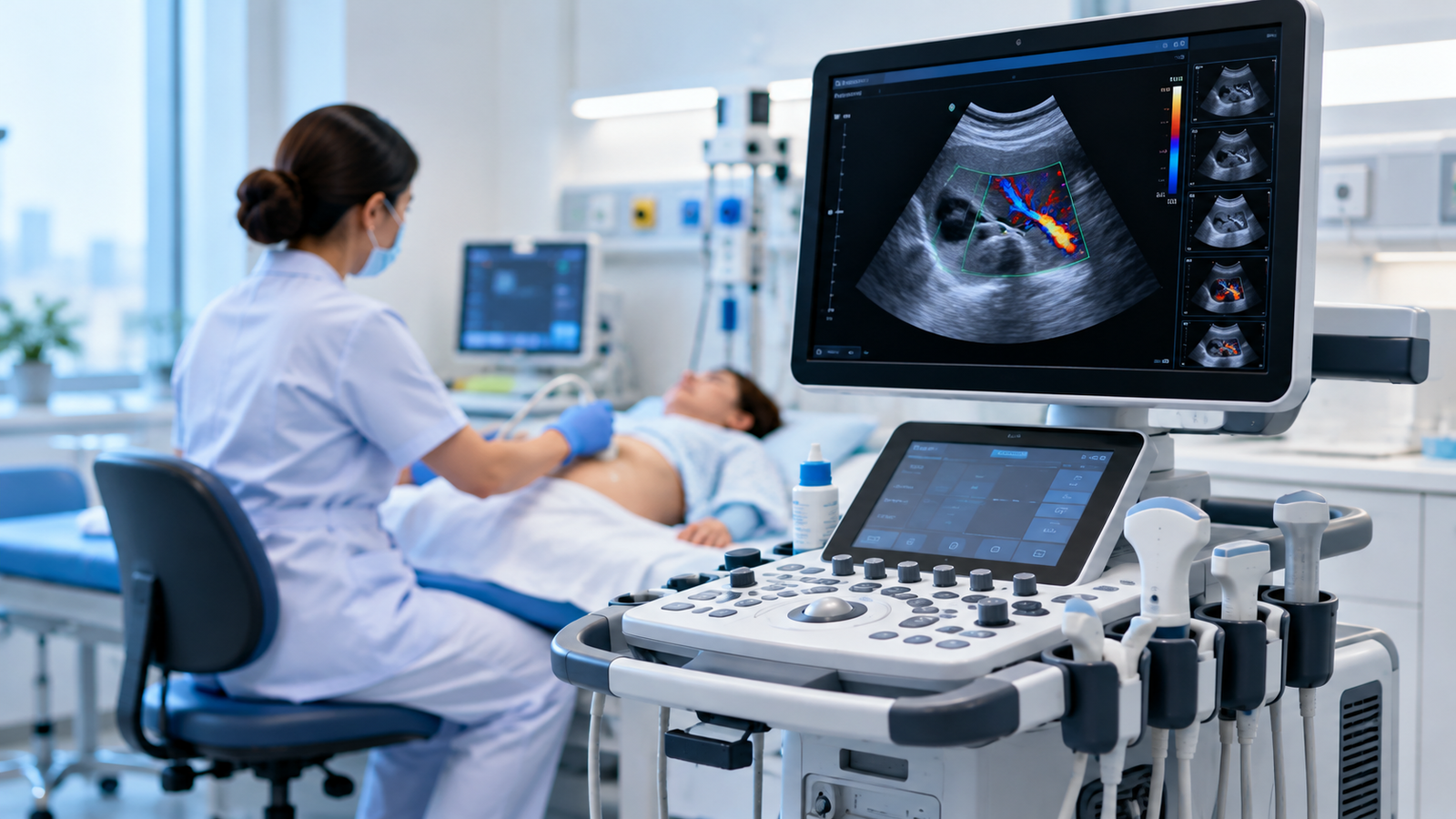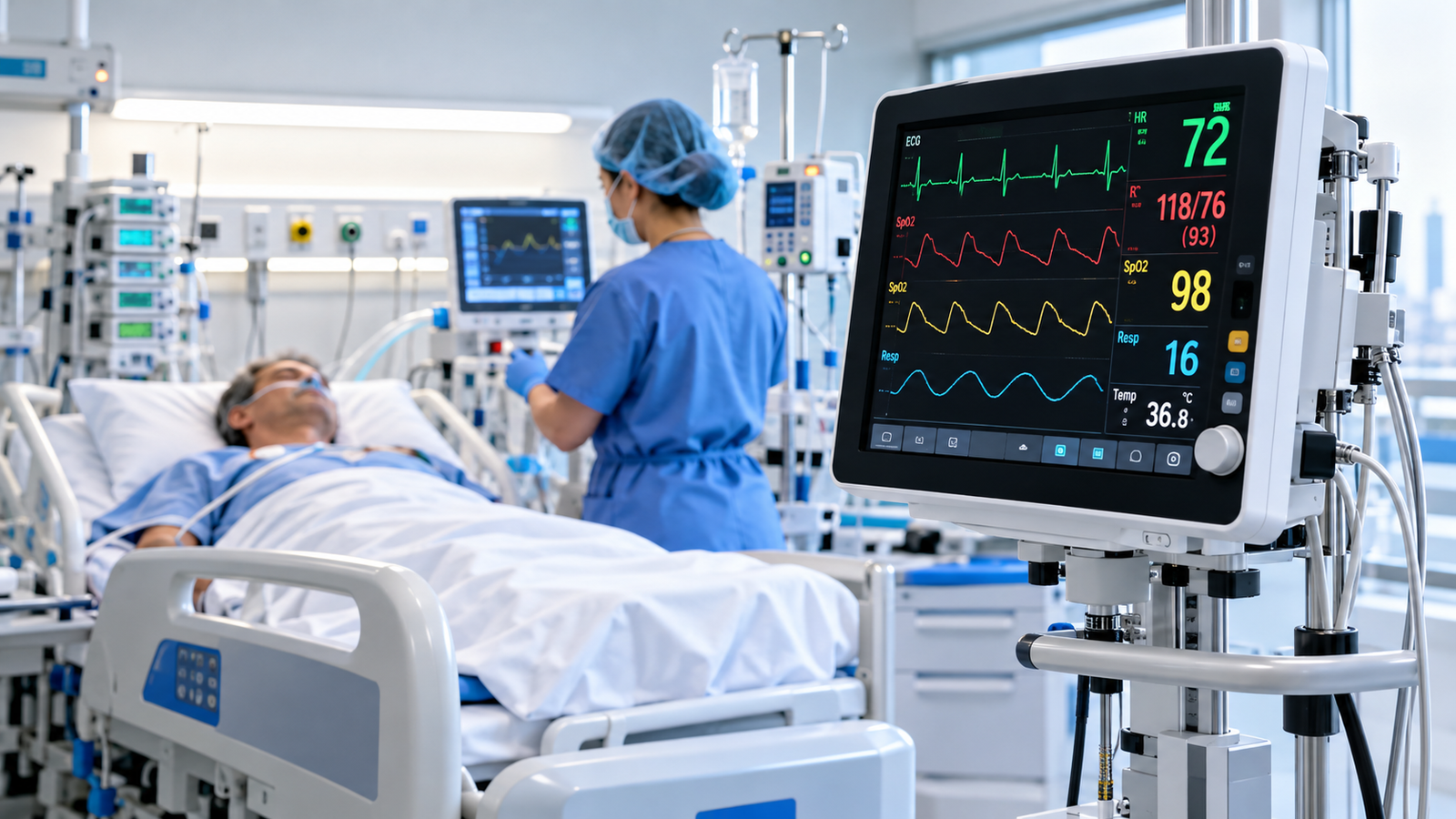
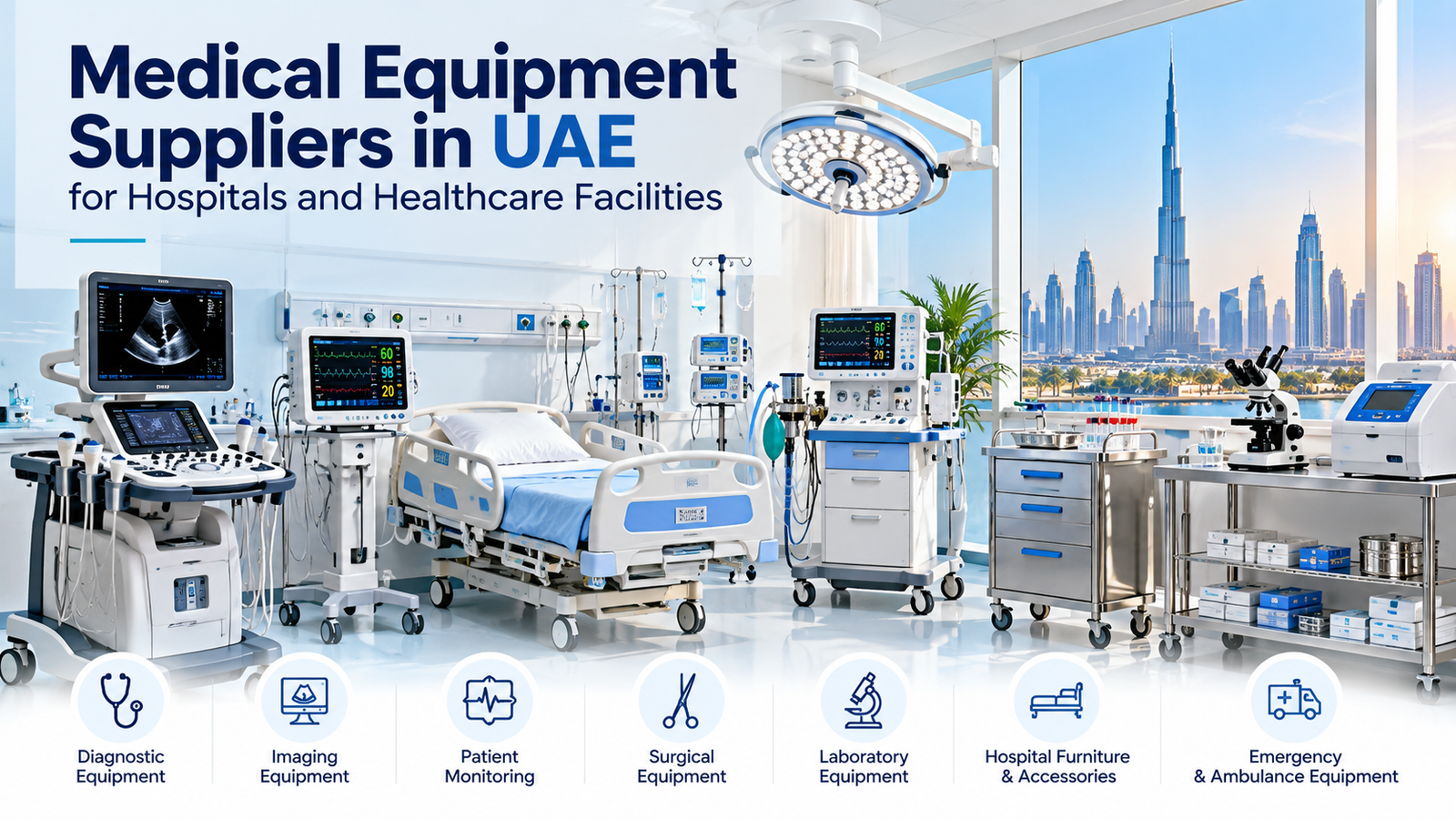
The UAE has developed a sophisticated healthcare ecosystem supported by hospitals, clinics, diagnostic centres, laboratories, specialist medical facilities and healthcare professionals. As healthcare facilities expand their services and adopt newer technologies, the need for dependable medical equipment suppliers in UAE continues to grow.
Choosing a medical equipment supplier is not simply about finding a product at the lowest available price. Healthcare organizations need equipment that is appropriate for their clinical requirements, supported by reliable documentation, delivered on time and backed by installation, training, maintenance and technical support where required.
This is particularly important in Dubai, where healthcare facilities operate within a structured regulatory environment. Dubai Health Authority (DHA) standards for medical equipment management address areas including maintenance planning, inventory management, risk management and quality monitoring. Dubai Health Authority
Whether you are sourcing ultrasound equipment for a diagnostic centre, patient monitoring systems for a hospital, laboratory equipment for a testing facility or surgical equipment for a specialist clinic, selecting the right supplier can have a significant impact on your facility’s operations.
This guide explains what to look for when evaluating medical equipment suppliers, the major categories of equipment available, the importance of after-sales support and how healthcare organizations in Dubai and across the UAE can make better procurement decisions.
Table of Contents
Why Reliable Medical Equipment Suppliers Matter in the UAE
Medical equipment directly supports diagnosis, monitoring, treatment and patient care. For that reason, healthcare facilities need to consider more than the initial purchase price when selecting a supplier.
A reliable medical equipment supplier can help healthcare organizations evaluate equipment according to their clinical requirements, facility conditions, operational needs and long-term maintenance considerations.
Equipment Quality and Reliability
Healthcare equipment may be used repeatedly throughout the day and, depending on the application, can play an important role in clinical decision-making.
A supplier should therefore provide clear information about:
- Intended use
- Product specifications
- Operating requirements
- Installation requirements
- Warranty coverage
- Maintenance requirements
- Available accessories
- Spare parts and service support
The objective should be to select equipment that is suitable for the facility’s actual requirements rather than simply choosing the most expensive or most feature-rich option.
Patient Safety
Medical equipment is ultimately connected to patient care. Equipment selection, installation, operation and maintenance should therefore be approached with appropriate attention to safety.
Dubai Health Authority’s medical equipment management standards emphasize continuous management of equipment to support safe, high-quality patient care and address areas such as maintenance, risk management and quality monitoring. Dubai Health Authority
Regulatory Considerations
Healthcare equipment procurement in the UAE can involve regulatory and licensing requirements depending on the product, healthcare facility and jurisdiction.
For example, the UAE Ministry of Health and Prevention’s medical equipment registration requirements state that marketing authorization holders must be registered with MOHAP and that the relevant marketing office or medical warehouse must hold a valid license. Ministry of Health and Prevention
Dubai also has its own healthcare regulatory framework. DHA is responsible for regulating healthcare facilities and professionals in Dubai and develops standards and policies for the healthcare sector. Dubai Health Authority
Because requirements can vary according to the equipment and applicable authority, buyers should confirm the relevant requirements before purchasing or importing equipment.
Product Availability
A dependable supplier should be able to provide realistic information about:
- Product availability
- Lead times
- Delivery schedules
- Installation timelines
- Accessories
- Replacement parts
- Service availability
This becomes particularly important when equipment is required for a new facility, expansion project or replacement of critical equipment.
Technical and After-Sales Support
Buying the equipment is only one stage of the equipment lifecycle.
Depending on the equipment, healthcare organizations may also require:
- Installation
- Commissioning
- User training
- Preventive maintenance
- Repairs
- Technical assistance
- Spare parts
- Calibration or performance checks where applicable
A supplier that can support these requirements can provide greater long-term value than a supplier focused only on the initial transaction.
Types of Medical Equipment Available in the UAE
The UAE healthcare market includes equipment for hospitals, clinics, diagnostic centres, laboratories, emergency services and specialist healthcare facilities.
The exact equipment required depends on the facility’s services and clinical requirements.
Diagnostic Equipment
Diagnostic equipment helps healthcare professionals assess patients and identify medical conditions.
Depending on the facility, diagnostic equipment may include equipment used for:
- General diagnostics
- Vital sign assessment
- Point-of-care testing
- Clinical examination
- Laboratory diagnostics
- Imaging
When purchasing diagnostic equipment, buyers should evaluate the intended clinical application, workflow, staff requirements, maintenance needs and integration requirements.
Imaging Equipment
Medical imaging plays an important role in diagnosis and clinical assessment.
Healthcare facilities may require different imaging technologies depending on their specialties and services. Procurement teams should consider factors such as:
- Clinical application
- Patient throughput
- Available installation space
- Infrastructure requirements
- Staff training
- Maintenance
- Service support
- Total ownership cost
Ultrasound Equipment
Ultrasound systems are used across multiple medical specialties and can vary considerably in configuration and application.
When evaluating ultrasound equipment, healthcare organizations should consider:
- Intended clinical specialties
- Transducer requirements
- Imaging capabilities
- Workflow
- Portability requirements
- Display and ergonomics
- Service support
- Training
- Accessories
A good supplier should help the buyer identify equipment appropriate for the intended application rather than simply recommending a product based on specifications.
Patient Monitoring Equipment
Patient monitoring equipment can be used in hospitals, clinics, emergency departments, critical care environments and other healthcare settings.
Depending on the clinical environment, monitoring requirements may include parameters such as vital signs and other physiological measurements.
Procurement teams should consider:
- Clinical application
- Patient type
- Monitoring requirements
- Number of beds or treatment areas
- Connectivity requirements
- Ease of use
- Maintenance
- Technical support
Surgical Equipment
Surgical facilities require equipment selected according to their procedures, specialties and operating environment.
Potential categories can include surgical instruments, operating room equipment, electrosurgical equipment and other procedure-specific technologies.
Buyers should evaluate compatibility, usability, maintenance requirements, availability of consumables or accessories and supplier support.
Critical Care Equipment
Critical care environments require dependable equipment and responsive technical support.
Depending on the facility, procurement may include equipment for:
- Patient monitoring
- Respiratory support
- Infusion
- Emergency care
- Critical patient management
When sourcing critical care equipment, procurement decisions should involve relevant clinical and biomedical engineering teams wherever appropriate.
Laboratory Equipment
Laboratories have specialized requirements based on the tests and services they provide.
Laboratory procurement can include equipment for:
- Sample preparation
- Testing
- Analysis
- Storage
- Laboratory safety
- Workflow management
Buyers should consider throughput, workflow, space, staff requirements, consumables, maintenance and technical support.
Hospital Furniture and Accessories
Medical equipment procurement can also extend beyond clinical machines.
Healthcare facilities may require:
- Hospital beds
- Examination couches
- Medical trolleys
- Treatment chairs
- Patient transfer equipment
- Storage solutions
- Other healthcare furniture and accessories
These products should be evaluated according to functionality, durability, hygiene and facility requirements.
Emergency and Ambulance Equipment
Emergency medical services require equipment that can support rapid patient assessment, stabilization and transport.
Depending on the service, this may include patient monitoring, emergency response equipment, transport equipment and other essential medical supplies.
Medical Equipment Suppliers in Dubai
Dubai is one of the UAE’s major healthcare markets and has developed a strong ecosystem involving healthcare providers, medical professionals, technology companies and healthcare investors.
The Dubai Health Authority regulates healthcare facilities and professionals within Dubai and establishes healthcare standards and policies. Dubai Health Authority
DHA’s healthcare investment materials also describe Dubai as a destination for healthcare investment, with a focus on healthcare infrastructure, technology, innovation and partnerships. Dubai Health Authority
For healthcare facilities looking for medical equipment suppliers in Dubai, proximity is useful, but it should not be the only selection criterion.
A buyer should also evaluate:
- Product portfolio
- Supplier experience
- Technical expertise
- Product documentation
- Regulatory requirements
- Installation support
- Training
- Warranty
- Maintenance
- Spare parts
- Response time
- Delivery capabilities
- Long-term service support
DHA’s medical equipment standards specifically address equipment management within DHA-licensed healthcare facilities, including maintenance planning, inventory management, risk management and quality monitoring. Dubai Health Authority
This reinforces why healthcare organizations should consider equipment lifecycle management when evaluating suppliers.
Medical Equipment Suppliers Across the UAE
Healthcare organizations across the UAE have different requirements depending on their location, facility type, clinical specialties and patient population.
A supplier serving the wider UAE may support customers in:
- Dubai
- Abu Dhabi
- Sharjah
- Ajman
- Ras Al Khaimah
- Fujairah
- Umm Al Quwain
The UAE government notes that healthcare regulation involves federal and local authorities, with Abu Dhabi, Dubai and Sharjah having their own local health regulatory authorities. UAE
For buyers, this means that supplier experience should be considered alongside the specific regulatory and operational requirements applicable to their facility.
A healthcare organization opening a new clinic in Abu Dhabi may have different procurement considerations from an established diagnostic centre in Dubai. Similarly, a laboratory may require a very different equipment portfolio from a hospital emergency department.
The right supplier should therefore begin with understanding the customer’s requirements rather than simply presenting a standard product catalogue.
How to Choose the Right Medical Equipment Supplier in the UAE
Choosing between medical equipment suppliers in UAE requires a structured evaluation process.
Here are some of the most important factors to consider.
1. Product Quality
Ask for complete product information and specifications.
Where applicable, request documentation relating to regulatory requirements, product conformity, manufacturer information and intended use.
2. Supplier Experience
Consider whether the supplier understands the healthcare environment and the type of equipment you require.
Experience should be evaluated based on relevant capabilities rather than simply the number of years a company has operated.
3. Product Range
A supplier with a broad portfolio may be useful when a healthcare organization needs several categories of equipment.
However, product range should not come at the expense of technical knowledge or service quality.
4. Manufacturer Relationships
Where relevant, understand whether the supplier works directly with manufacturers, authorized channels or established distribution networks.
Ask for appropriate documentation if manufacturer authorization is important to the procurement decision.
5. Regulatory Compliance
Confirm that the equipment and supply arrangement meet applicable UAE requirements.
Do not assume that regulatory requirements are identical for every category of medical equipment.
6. Warranty
Understand exactly what the warranty covers.
Ask about:
- Warranty period
- Parts coverage
- Labour coverage
- Exclusions
- Service response
- Replacement policies
7. Installation
Some equipment requires professional installation or commissioning.
Before purchasing, determine whether installation is included and who is responsible for preparing the facility.
8. Training
Healthcare professionals and technical teams may require training depending on the equipment.
Ask whether the supplier provides user training and whether training documentation is available.
9. Preventive Maintenance
Ask how preventive maintenance is handled after installation.
A maintenance plan can help healthcare facilities manage equipment performance and reduce avoidable operational disruptions.
10. Spare Parts
Ask whether replacement parts and accessories are available locally or through an established supply channel.
Availability of spare parts can affect the long-term usability of equipment.
11. Delivery Timelines
Request a realistic delivery schedule rather than relying only on a general estimated timeframe.
For new healthcare facilities, equipment delivery should be coordinated with installation, commissioning and facility readiness.
12. Total Cost of Ownership
The cheapest quotation is not always the lowest-cost option over the equipment’s lifecycle.
Consider:
- Purchase price
- Installation
- Training
- Maintenance
- Consumables
- Accessories
- Spare parts
- Repairs
- Energy or infrastructure requirements
- Expected useful life
Why After-Sales Support Matters When Buying Medical Equipment
A medical equipment purchase should be considered a long-term relationship rather than a one-time transaction.
Installation
Correct installation can be important for equipment performance, safety and usability.
The supplier should clarify installation requirements before the purchase is finalized.
Calibration and Performance Checks
Certain equipment may require calibration or performance verification depending on its intended use and applicable requirements.
Healthcare organizations should establish who is responsible for these activities and how frequently they should be performed.
User Training
Even well-designed equipment requires appropriate user understanding.
Training can help healthcare professionals understand correct operation, routine procedures and equipment limitations.
Preventive Maintenance
Preventive maintenance helps facilities manage equipment systematically.
DHA’s standards for medical equipment management specifically include maintenance planning and quality monitoring. Dubai Health Authority
Repairs and Technical Assistance
When equipment experiences a problem, response time can matter.
Before purchasing, ask the supplier:
- How are service requests submitted?
- What is the expected response time?
- Is technical support available locally?
- Are spare parts available?
- Who performs repairs?
Equipment Lifecycle Management
Healthcare organizations should consider the full lifecycle of equipment from procurement and installation through maintenance, repair and eventual replacement.
This approach can improve procurement decisions and help facilities plan future capital expenditure.
What Healthcare Facilities Should Consider Before Purchasing Medical Equipment
Before requesting quotations, create a clear equipment requirement.
Facility Requirements
Determine:
- Where the equipment will be installed
- Available space
- Electrical requirements
- Environmental requirements
- Connectivity requirements
- Supporting infrastructure
Patient Volume
Expected patient volume can influence equipment capacity and workflow requirements.
A small specialist clinic may have very different needs from a large hospital.
Intended Use
Clearly define what the equipment will be used for.
This helps suppliers recommend appropriate configurations rather than unnecessary features.
Equipment Specifications
Compare specifications based on actual clinical requirements.
Avoid choosing equipment simply because it has a longer list of features.
Staff Requirements
Consider who will operate the equipment and whether training is required.
Budget
Establish both the initial purchase budget and the expected ongoing operating costs.
Maintenance Requirements
Understand preventive maintenance, servicing and replacement requirements before purchasing.
Warranty
Review warranty terms carefully and clarify exclusions.
Supplier Support
Evaluate the supplier’s ability to provide installation, training, technical support and spare parts.
Future Scalability
Where appropriate, consider whether the equipment can support future expansion of services or patient volume.
Medical Equipment Supplier vs Medical Equipment Distributor
The terms medical equipment supplier and medical equipment distributor are sometimes used interchangeably, but their business roles can differ.
A distributor may primarily handle the distribution of products from manufacturers or other supply channels.
A supplier may offer a broader procurement service that can include product sourcing, consultation, delivery, installation, training and after-sales support.
However, the terminology itself should not be the deciding factor.
Healthcare buyers should focus on what the company can actually provide.
Ask:
- What products can you supply?
- What manufacturers do you work with?
- Can you provide documentation?
- Do you provide installation?
- Do you offer training?
- Do you provide maintenance?
- Are spare parts available?
- What technical support is available?
- Can you support the facility after installation?
The quality of service, technical capability and long-term support are usually more important than the label used to describe the business.
Common Mistakes to Avoid When Choosing Medical Equipment Suppliers
Choosing Only Based on Price
A lower purchase price may look attractive, but it may not represent the lowest total cost over the equipment’s lifecycle.
Ignoring After-Sales Support
Equipment without dependable service support can create operational challenges when repairs or maintenance are required.
Not Checking Warranty Terms
Do not assume every component or service is automatically covered.
Review the warranty before placing the order.
Not Considering Spare Parts
Ask how easily replacement parts, accessories and consumables can be obtained.
Failing to Assess Installation and Training
Some equipment requires specialist installation or user training. Confirm these requirements in advance.
Buying Equipment Without Considering Facility Requirements
Equipment may have specific space, electrical, environmental or infrastructure requirements.
These should be assessed before purchase.
Not Evaluating Technical Support
Ask who will support the equipment after installation and how service requests are handled.
Focusing Only on the Product
The equipment itself is only one part of the procurement decision. Supplier capability, service and lifecycle support are equally important.
Who are the best medical equipment suppliers in UAE?
Frequently Asked Questions
There is no single supplier that is automatically the best for every healthcare facility. The right supplier depends on the facility’s requirements, equipment category, budget, regulatory considerations, technical support needs and after-sales service.
Healthcare organizations should compare suppliers based on product quality, documentation, technical capabilities, delivery, warranty, maintenance and long-term support.
How do I choose a medical equipment supplier in Dubai?
Start by defining your clinical and operational requirements. Then compare suppliers based on product range, regulatory support, manufacturer relationships, installation, training, warranty, technical support, spare parts and after-sales service.
For healthcare facilities in Dubai, buyers should also understand the applicable DHA requirements.
What types of medical equipment are available in the UAE?
Medical equipment available through UAE healthcare supply channels can include diagnostic equipment, imaging systems, ultrasound equipment, patient monitoring equipment, surgical equipment, critical care equipment, laboratory equipment, hospital furniture and emergency medical equipment.
Availability depends on the supplier and applicable regulatory requirements.
What should I check before buying medical equipment?
Review the equipment’s intended use, specifications, regulatory requirements, warranty, installation requirements, training, maintenance, spare parts, delivery timeline and total cost of ownership.
Do medical equipment suppliers provide installation and maintenance?
Many suppliers can provide installation and maintenance services, although the exact scope varies by supplier and product. Buyers should confirm whether installation, commissioning, training and preventive maintenance are included in the quotation.
How important is after-sales service for medical equipment?
After-sales service can be highly important because healthcare equipment may require installation, training, preventive maintenance, repairs and spare parts throughout its operational life.
What medical equipment is commonly used in hospitals?
Hospital equipment varies by department and specialty. Common categories include patient monitoring equipment, diagnostic equipment, imaging systems, surgical equipment, critical care equipment, laboratory equipment and emergency equipment.
Can medical equipment suppliers deliver across the UAE?
Many suppliers can serve healthcare organizations across multiple emirates. Buyers should confirm delivery coverage, lead times, installation capabilities and technical support for their specific location.
How a Professional Medical Equipment Supplier Can Support Your Healthcare Facility
A reliable healthcare equipment partner should do more than provide a catalogue and quotation.
The procurement process can involve several stages:
Requirement Assessment
Understanding the facility, clinical application and intended use.
Equipment Selection
Identifying suitable products based on technical and operational requirements.
Quotation and Procurement
Providing transparent product information, pricing and delivery expectations.
Delivery
Coordinating logistics according to the facility’s requirements.
Installation
Supporting installation and commissioning where applicable.
Training
Helping relevant users understand equipment operation.
After-Sales Support
Providing maintenance, technical assistance and spare parts support according to the agreed service arrangement.
This end-to-end approach can make the procurement process more structured and help healthcare organizations make informed decisions.
Why Choose Medical Equipment Suppliers in UAE With a Long-Term Approach?
Healthcare technology continues to evolve, but successful procurement is not simply about purchasing newer equipment.
A good procurement decision should balance:
Clinical requirements + Equipment quality + Regulatory considerations + Total cost + Service support
For hospitals, clinics, laboratories and diagnostic centres, the supplier’s ability to understand the application can be just as important as the equipment itself.
A professional medical equipment supplier should therefore work as a healthcare procurement partner, helping customers evaluate equipment based on practical requirements and supporting them beyond the initial sale.
Conclusion: Choosing the Right Medical Equipment Supplier in UAE
Selecting among medical equipment suppliers in UAE requires more than comparing prices.
Healthcare organizations should consider equipment quality, intended use, regulatory requirements, supplier experience, product availability, installation, training, warranty, maintenance, spare parts and after-sales support.
For organizations searching for medical equipment suppliers in Dubai, local technical support and understanding of the healthcare environment can be particularly valuable. At the same time, healthcare facilities across Abu Dhabi, Sharjah and the other UAE emirates should evaluate suppliers according to their own facility requirements and applicable regulations.
The best procurement decision is one that considers the complete equipment lifecycle rather than focusing only on the initial purchase.
If your hospital, clinic, diagnostic centre or laboratory is looking for medical equipment in the UAE, work with a supplier that understands your requirements and can support you throughout the procurement and equipment lifecycle.
Contact a professional medical equipment supplier to discuss your equipment requirements, request product information or obtain a quotation.