Last Updated: September 2026
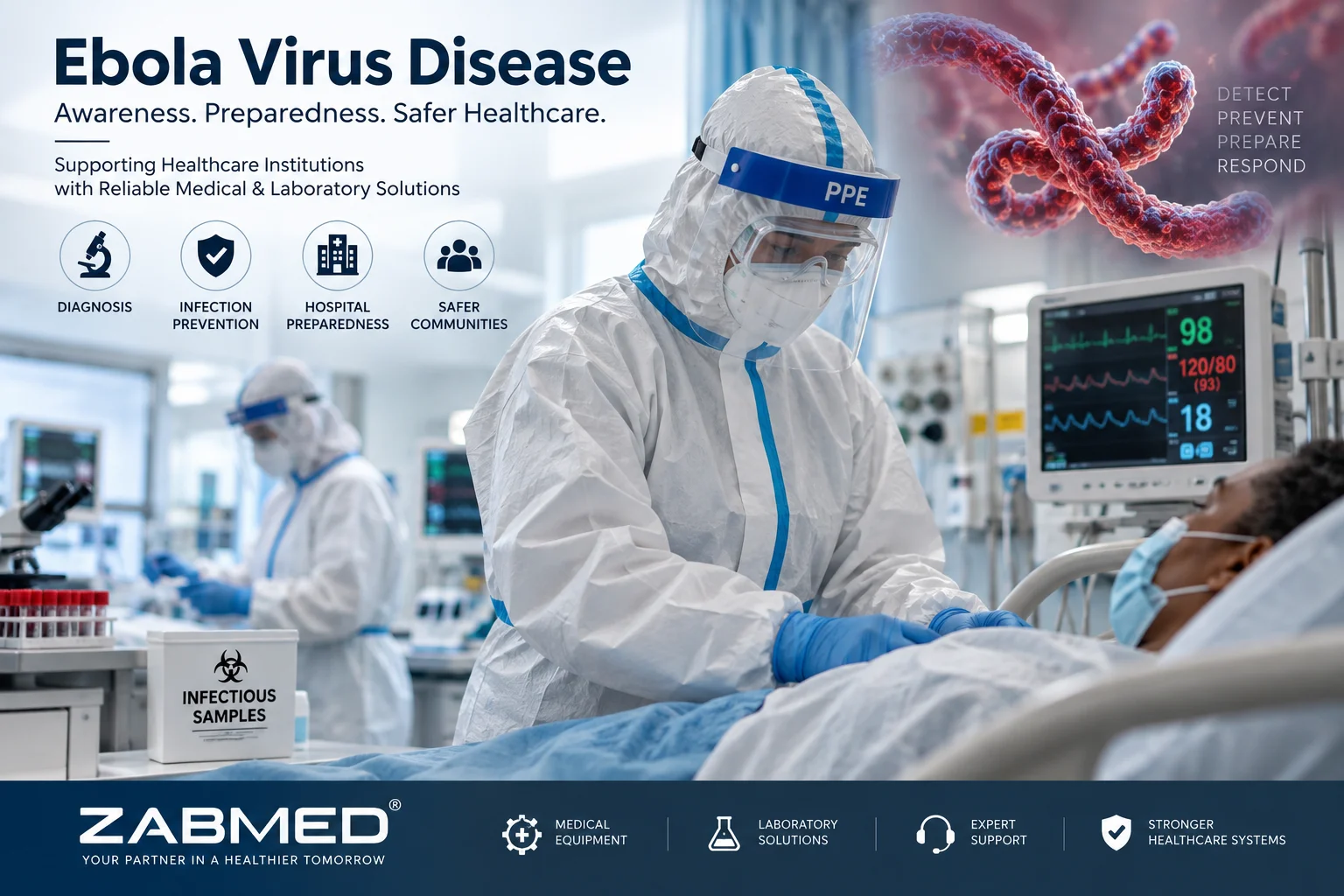
Ebola virus disease (EVD), commonly known as Ebola, is a rare but severe infectious disease that can cause serious illness and death. Because its early symptoms can resemble other infections such as malaria, typhoid fever and meningitis, early recognition, laboratory testing, infection prevention and clinical preparedness are essential for controlling outbreaks.
This research-based guide explains what Ebola virus disease is, how Ebola spreads, the symptoms to watch for, how Ebola is diagnosed, available treatment and vaccines, and how healthcare facilities can prepare for suspected cases and infectious disease outbreaks.
The article also examines the role that reliable medical and laboratory equipment suppliers can play in supporting healthcare institutions with laboratory and diagnostic infrastructure
What Is Ebola Virus Disease?
Ebola virus disease is a severe illness caused by viruses in the Orthoebolavirus genus. Several Ebola virus species are known, including Ebola virus, Sudan virus and Bundibugyo virus.
According to the World Health Organization (WHO), Ebola disease is rare but can be severe and frequently fatal. Historical Ebola outbreaks have had case fatality rates ranging from approximately 25% to 90%, depending on the virus species, outbreak circumstances and availability of appropriate care.
Ebola was first identified in 1976, and since then, outbreaks have occurred primarily in parts of sub-Saharan Africa.
The disease can initially present with general symptoms such as fever, weakness, muscle pain, headache and sore throat. As the illness progresses, patients may develop vomiting, diarrhoea, rash and, in severe cases, bleeding.
For reliable background information, see the World Health Organization Ebola disease information.
What Causes Ebola?
Ebola is caused by infection with an orthoebolavirus.
The natural ecological reservoir is not completely established for every Ebola virus species, but fruit bats are considered an important suspected natural host for some Ebola viruses. Humans can become infected following exposure to infected animals and subsequently transmit the virus to other people through contact with infectious body fluids.
Ebola outbreaks can therefore involve both animal-to-human and human-to-human transmission.
What Are the Symptoms of Ebola?
One of the most common questions people search for is:
What are the first symptoms of Ebola?
The early symptoms of Ebola can be difficult to distinguish from other infectious diseases. Common symptoms include:
- Fever
- Fatigue and weakness
- Muscle pain
- Headache
- Sore throat
- Loss of appetite
- Vomiting
- Diarrhoea
- Abdominal pain
- Rash
- Unexplained bleeding in some patients
According to the CDC, Ebola symptoms generally appear between 2 and 21 days after exposure, with an average incubation period of approximately 8 to 10 days.
Early Symptoms of Ebola
Early symptoms may include:
Fever → headache → weakness/fatigue → muscle aches → sore throat → loss of appetite
These symptoms are not specific to Ebola and may occur with many other infections.
This is why healthcare professionals should consider a patient’s travel history, exposure history, symptoms and potential contact with infected individuals when assessing a suspected case.
Later Symptoms
As Ebola progresses, gastrointestinal symptoms such as vomiting and diarrhoea may develop. Some patients can experience unexplained bleeding.
However, bleeding is not present in every Ebola patient, so the absence of bleeding does not rule out Ebola.
How Long Does It Take for Ebola Symptoms to Appear?
The Ebola incubation period is generally 2 to 21 days after exposure.
Importantly, people are not considered contagious before symptoms begin. Transmission occurs when an infected person develops symptoms and infectious body fluids become involved.
Anyone who believes they may have been exposed to Ebola should seek professional medical guidance rather than waiting for symptoms to become severe.
How Does Ebola Spread?
Another major search question is:
How is Ebola transmitted?
Ebola can spread through direct contact with the blood, secretions, organs or other body fluids of an infected person, particularly when the person is symptomatic.
Transmission can also occur through contact with contaminated materials or surfaces.
According to the WHO, Ebola transmission can occur through exposure to infected body fluids and contaminated materials. Healthcare workers can be at increased risk when appropriate infection prevention and control procedures are not followed.
Can Ebola Spread Through the Air?
Ebola is not transmitted through the air in the same way as diseases such as influenza or COVID-19.
Simply being in the same room as an infected person does not automatically mean that transmission will occur.
The primary concern is contact with infectious body fluids and contaminated materials, particularly during direct patient care.
This makes infection prevention and control (IPC), appropriate personal protective equipment (PPE), safe patient handling and environmental controls extremely important in healthcare settings.
Can Ebola Spread Through Contaminated Objects?
Yes.
Ebola transmission can occur through contact with contaminated materials and objects when infectious body fluids are present.
Healthcare facilities therefore need appropriate procedures for:
- Patient isolation
- Cleaning and disinfection
- Handling contaminated materials
- Waste management
- Safe specimen collection
- Laboratory specimen transport
- Healthcare worker protection
- Environmental infection control
Effective infection prevention is not dependent on one piece of equipment. It requires a coordinated healthcare facility system involving trained personnel, appropriate procedures, equipment, laboratory capacity and monitoring.
How Is Ebola Diagnosed?
How is Ebola tested? is another important question associated with Ebola searches.
Ebola cannot be reliably diagnosed based only on symptoms because its early clinical presentation can resemble several other infectious diseases.
The WHO notes that Ebola can be difficult to distinguish clinically from illnesses such as malaria, typhoid fever and meningitis. Laboratory testing is therefore critical for confirming suspected cases.
Diagnostic testing may involve molecular laboratory methods such as real-time reverse transcription polymerase chain reaction (RT-PCR).
Laboratory confirmation allows healthcare authorities and clinical teams to make appropriate decisions regarding:
- Patient management
- Infection prevention
- Isolation procedures
- Contact tracing
- Public health response
- Outbreak surveillance
The WHO’s 2026 interim guidance emphasizes that rapid diagnosis is important for providing timely care and helping interrupt transmission.
For detailed technical guidance, healthcare professionals can consult the WHO Interim Guidance on Ebola Diagnostic Testing.
Why Is Laboratory Preparedness Important During an Ebola Outbreak?
Laboratory capacity is one of the most important components of infectious disease preparedness.
During an outbreak, healthcare institutions may need to manage:
- Suspected patient specimens
- Diagnostic testing workflows
- Sample handling
- Sample storage
- Laboratory processing
- Infection prevention procedures
- Data management
- Communication between clinical and laboratory teams
Laboratories handling suspected high-risk infectious disease specimens require appropriate biosafety procedures, trained personnel and validated workflows.
Equipment alone cannot guarantee laboratory safety. Biosafety protocols, staff training, facility design, personal protective equipment and appropriate operating procedures must work together.
Is There a Cure or Treatment for Ebola?
There is no single treatment that applies to every Ebola virus species.
Treatment depends on the specific virus involved and the clinical situation.
For Ebola virus disease caused by Orthoebolavirus zairense, specific approved treatments are available. The CDC identifies Inmazeb and Ebanga as FDA-approved treatments for this species.
Supportive care is also extremely important.
It can include:
- Fluids and electrolyte management
- Oxygen and blood pressure support when required
- Treatment of specific symptoms
- Management of secondary infections
- Nutritional support
- Close monitoring of the patient’s condition
Early intensive supportive care can improve the likelihood of survival.
Treatment availability can vary depending on the Ebola virus species. Therefore, healthcare institutions should rely on current guidance from public health authorities rather than assuming that a treatment or vaccine for one Ebola species applies to another.
Is There an Ebola Vaccine?
Vaccination is an important component of Ebola outbreak response, but Ebola vaccines are species-specific.
For example, vaccines have been developed and used against Ebola virus disease caused by Zaire ebolavirus, while vaccines for other Ebola virus species remain an area of ongoing research and development.
This distinction is particularly important during the 2026 Ebola outbreak involving Bundibugyo virus disease in the Democratic Republic of the Congo (DRC).
The WHO has reported that there is currently no approved vaccine or specific treatment for Bundibugyo virus disease.
Healthcare institutions should therefore follow current WHO and national public health recommendations regarding vaccination, clinical management and outbreak response.
Ebola Outbreak 2026: What Healthcare Institutions Need to Know
The Ebola situation in 2026 demonstrates why infectious disease preparedness remains important.
The WHO has reported an ongoing Bundibugyo virus disease outbreak in the Democratic Republic of the Congo, with geographic expansion during 2026. The outbreak has created significant challenges involving surveillance, healthcare access, infection prevention, clinical capacity and early detection.
Because outbreak figures can change quickly, healthcare professionals and organizations should refer directly to current WHO outbreak updates rather than relying on static numbers published in older articles.
WHO Ebola Outbreak in the Democratic Republic of the Congo – 2026
How Can Hospitals Prepare for Suspected Ebola Cases?
Healthcare preparedness is not limited to treating confirmed Ebola patients.
Hospitals and clinics can strengthen preparedness by developing systems for:
1. Early Identification
Healthcare workers should be able to recognize potential Ebola symptoms and obtain relevant exposure and travel information.
2. Infection Prevention and Control
Healthcare facilities should have clear procedures for:
- Patient isolation
- PPE use
- Hand hygiene
- Environmental cleaning
- Waste management
- Safe handling of contaminated materials
3. Diagnostic Preparedness
Facilities should have access to appropriate diagnostic pathways and laboratory services capable of handling suspected infectious disease specimens safely.
4. Staff Training
Healthcare workers need appropriate training in infection prevention procedures, PPE use, specimen handling and emergency response.
5. Laboratory Infrastructure
Reliable laboratory equipment and supporting infrastructure can help healthcare and research institutions maintain routine diagnostic and laboratory workflows.
6. Emergency Response Planning
Hospitals should establish protocols for communication, patient movement, laboratory coordination and collaboration with public health authorities.
What Role Can Medical Equipment Suppliers Play in Ebola Preparedness?
An infectious disease outbreak places pressure on the entire healthcare infrastructure.
While medical equipment suppliers do not diagnose or treat Ebola, they can support hospitals, clinics, laboratories and healthcare institutions by helping them source the equipment required for their clinical, diagnostic and laboratory operations.
This can include equipment used for general laboratory workflows, sample preparation, monitoring and healthcare facility support.
The important principle is that equipment should be selected according to the healthcare institution’s clinical requirements, laboratory protocols, regulatory requirements and infection-control procedures.
How ZabMed Can Support Healthcare Institutions
ZabMed is a UAE-based supplier of medical and diagnostic equipment serving hospitals, clinics and research facilities across the UAE.
Its portfolio includes clinical diagnostics, microbiology, research and quality-control equipment, as well as general laboratory equipment. ZabMed also provides product guidance, installation assistance and after-sales support.
For healthcare institutions strengthening their laboratory and diagnostic infrastructure, ZabMed can support equipment sourcing across areas such as:
- Laboratory equipment
- Clinical diagnostic equipment
- Centrifuges
- Laboratory incubators
- Balances
- Pipettes
- Drying ovens
- Stirrers
- General laboratory support equipment
These products can form part of a broader healthcare infrastructure strategy.
However, it is important to clarify that medical and laboratory equipment does not by itself diagnose or treat Ebola. Ebola diagnosis, treatment and infection control must follow applicable clinical, laboratory, biosafety and public health protocols.
Healthcare institutions looking for reliable medical and laboratory equipment in the UAE can explore the ZabMed medical equipment website or learn more about the company through its About ZabMed page.
Why Reliable Laboratory Equipment Matters
During infectious disease preparedness, reliability is particularly important.
Laboratories and healthcare institutions may need equipment that supports consistent day-to-day workflows while also allowing them to respond efficiently when diagnostic demand increases.
Important considerations when selecting laboratory equipment include:
- Equipment quality
- Intended application
- Accuracy and reliability
- Capacity
- Maintenance requirements
- Availability of technical support
- Installation requirements
- Regulatory and laboratory requirements
- After-sales service
A medical equipment supplier should therefore be viewed as more than a source of individual products. The right supplier can help healthcare institutions identify suitable equipment and establish dependable laboratory infrastructure.
How Can Ebola Be Prevented?
Ebola prevention requires a combination of public health measures and healthcare infection-control practices.
Important measures include:
- Early detection of suspected cases
- Appropriate patient isolation
- Contact tracing
- Infection prevention and control
- Proper use of PPE
- Safe handling of body fluids
- Safe laboratory specimen handling
- Environmental cleaning and disinfection
- Safe burial practices where applicable
- Community education
- Vaccination when an appropriate vaccine is available
- Rapid communication with public health authorities
The WHO identifies surveillance, contact tracing, laboratory services, infection prevention and control, safe burials, vaccination where appropriate and community engagement as important elements of Ebola outbreak control.
Frequently Asked Questions About Ebola Virus Disease
What are the first signs of Ebola?
The first signs may include fever, fatigue, weakness, muscle pain, headache and sore throat. Later symptoms can include vomiting, diarrhoea, abdominal pain, rash and sometimes unexplained bleeding.
How long is the Ebola incubation period?
The incubation period is generally 2 to 21 days after exposure.
Is Ebola airborne?
Ebola is not spread through the air in the same way as influenza or COVID-19. Transmission is primarily associated with contact with infectious body fluids and contaminated materials.
How is Ebola diagnosed?
Ebola requires laboratory testing for confirmation because its symptoms can resemble other infectious diseases. Molecular testing such as RT-PCR may be used as part of the diagnostic process.
Is Ebola curable?
Some Ebola virus species have specific approved treatments, while supportive care is important for patients. Available treatments depend on the virus species involved.
Is there an Ebola vaccine?
Vaccines are available for certain Ebola virus species, particularly Zaire ebolavirus. Vaccine availability and recommendations depend on the specific virus and outbreak situation.
Can hospitals prepare for Ebola outbreaks?
Yes. Healthcare preparedness can include surveillance, isolation procedures, infection prevention and control, PPE, laboratory capacity, staff training, diagnostic pathways and emergency response planning.
Can a medical equipment supplier help hospitals prepare for infectious disease outbreaks?
A medical equipment supplier can support healthcare institutions with appropriate medical and laboratory equipment. However, equipment is only one part of an effective infectious disease preparedness program and must be combined with appropriate clinical, laboratory, biosafety and infection-control procedures.
Conclusion
Ebola virus disease remains an important global public health concern because of its potential severity, rapid transmission in healthcare and community settings, and the challenges involved in early diagnosis and outbreak control.
The most important lessons from Ebola outbreaks are the value of early detection, reliable laboratory testing, infection prevention and control, trained healthcare workers, appropriate clinical care and strong healthcare infrastructure.
The ongoing Ebola situation in the Democratic Republic of the Congo in 2026 further demonstrates the importance of maintaining healthcare preparedness and laboratory capacity even outside active outbreaks.
For hospitals, clinics, laboratories and research facilities, working with an experienced medical and diagnostic equipment supplier can help strengthen the infrastructure required for routine healthcare operations and emergency preparedness.
ZabMed supports healthcare institutions across the UAE with medical, diagnostic and laboratory equipment, along with product guidance, installation assistance and after-sales support.
Explore ZabMed Medical & Diagnostic Equipment
Medical Disclaimer
Disclaimer: This article is intended for general educational and informational purposes and does not constitute medical advice, diagnosis or treatment. Suspected Ebola virus disease is a serious medical and public health matter. Individuals with possible exposure or compatible symptoms should seek guidance from qualified healthcare professionals and relevant public health authorities. Healthcare institutions should follow current WHO, CDC and applicable national guidelines.