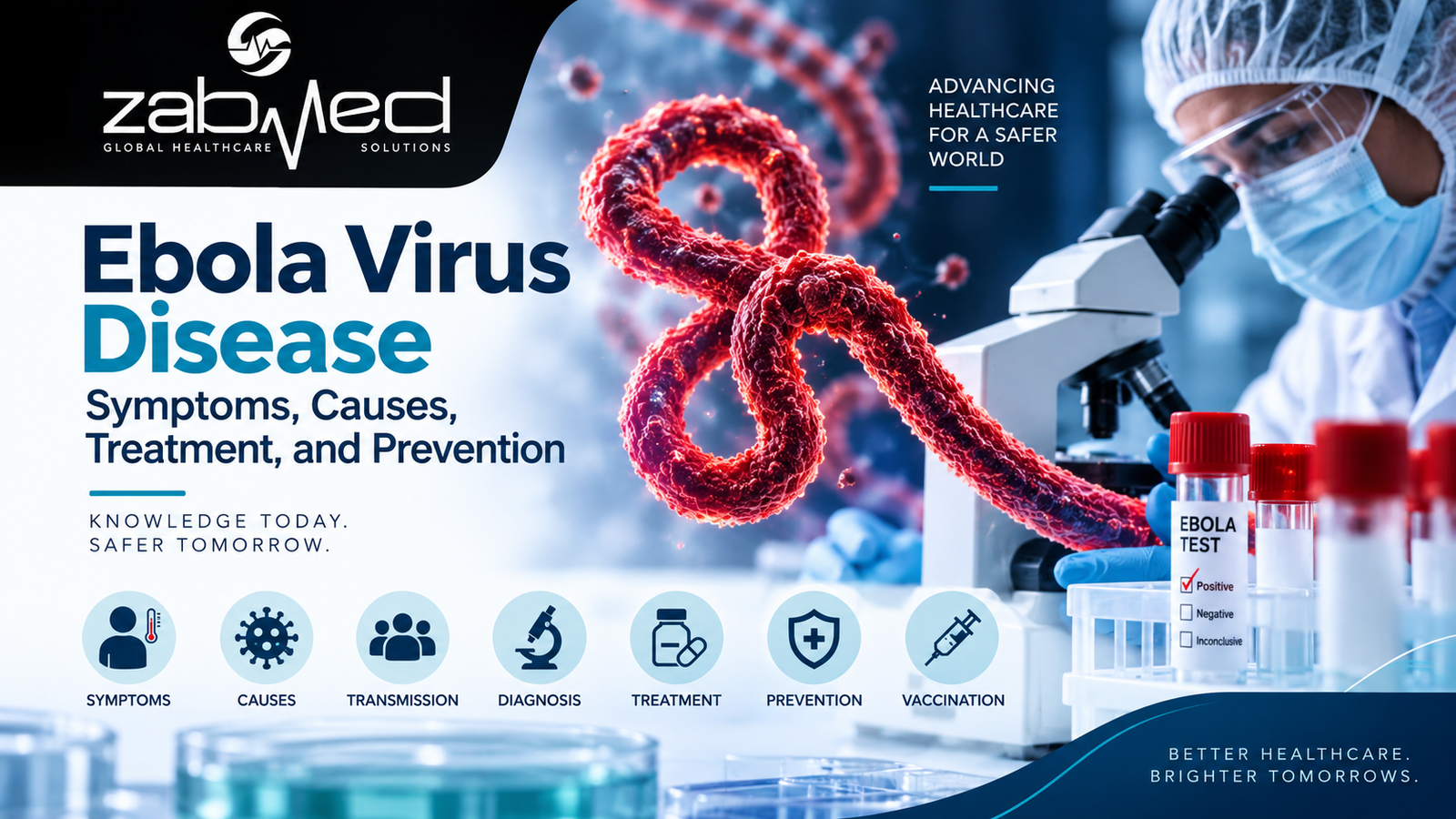
Ebola virus disease (EVD) is a rare but serious viral infection that can cause severe illness and may be fatal. It is caused by Ebola virus (EBOV), one of several viruses in the Orthoebolavirus genus.
Ebola disease can initially resemble other infections, making early recognition and laboratory testing particularly important. The incubation period is generally 2 to 21 days, and people infected with Ebola are generally considered infectious only after symptoms begin.
Although Ebola remains a serious disease, advances in diagnosis, supportive care, infection prevention, vaccination, and specific treatments for Ebola virus disease have improved the ability of healthcare systems to manage outbreaks and improve patient outcomes.
This guide from ZabMed explains the symptoms, causes, transmission, diagnosis, treatment, prevention, and vaccination associated with Ebola virus disease.
Table of Contents
What Is Ebola Virus Disease?
Ebola virus disease is an infectious disease caused by Ebola virus (EBOV). The virus belongs to the Orthoebolavirus genus within the Filoviridae family.
The term Ebola disease can refer more broadly to illnesses caused by several orthoebolaviruses. These include:
- Ebola virus, which causes Ebola virus disease
- Sudan virus, which causes Sudan virus disease
- Bundibugyo virus, which causes Bundibugyo virus disease
This distinction is medically important because available vaccines and specific treatments do not apply equally to all Ebola-causing viruses. Current WHO guidance states that licensed vaccines and approved therapeutics are available for Ebola virus disease, while specific approved products for some other Ebola diseases remain unavailable.
Ebola disease is uncommon but can be severe. WHO reports that the average case-fatality rate across Ebola disease outbreaks has been around 50%, although rates have varied considerably between outbreaks. Early intensive supportive care, including rehydration and treatment of symptoms, improves survival.
What Causes Ebola Virus Disease?
Ebola virus disease is caused by infection with Ebola virus.
Scientists believe that certain fruit bats may serve as natural hosts of orthoebolaviruses. Transmission from animals to humans may occur through contact with infected animals, their blood, secretions, organs, or other bodily fluids.
Once Ebola enters the human population, it can spread from person to person through contact with infected bodily fluids.
How Does Ebola Spread?
Ebola primarily spreads through direct contact with the blood or other bodily fluids of an infected person.
Potentially infectious materials can include:
- Blood
- Vomit
- Stool
- Urine
- Saliva
- Sweat
- Semen
- Vaginal fluids
- Other bodily fluids
- Clothing, bedding, medical equipment, or other objects contaminated with infected bodily fluids
The virus can enter the body through broken skin or mucous membranes such as the eyes, nose, or mouth.
Healthcare workers and caregivers can face a higher risk when caring for patients without appropriate infection-prevention and control measures.
Can Ebola Spread Before Symptoms Appear?
People infected with Ebola are generally not considered infectious before symptoms develop. Once symptoms begin, the risk of transmission increases, particularly through contact with infected bodily fluids.
Can Ebola Spread Through the Air?
Ebola is not primarily transmitted through ordinary airborne spread in the way that respiratory infections such as influenza or COVID-19 are.
The principal route of person-to-person transmission is contact with infected bodily fluids or contaminated materials. Healthcare workers nevertheless require appropriate personal protective equipment and infection-control procedures when evaluating or treating suspected patients.
Ebola Incubation Period
The incubation period is the time between infection and the development of symptoms.
For Ebola disease, the incubation period ranges from 2 to 21 days. During this period, a person infected with Ebola is generally not considered capable of transmitting the infection before symptoms develop.
People who have had a credible exposure may therefore be monitored for symptoms during this period according to public-health guidance.
What Are the Symptoms of Ebola?
Ebola symptoms can appear suddenly and may initially resemble other infectious diseases. Symptoms alone cannot confirm Ebola.
Early Symptoms of Ebola
Early symptoms may include:
- Fever
- Severe headache
- Fatigue
- Weakness
- Muscle and joint pain
- Sore throat
- Loss of appetite
- General malaise
According to WHO, these symptoms may be followed by gastrointestinal and other systemic symptoms as the illness progresses.
Later Symptoms
As Ebola disease progresses, patients may develop:
- Vomiting
- Diarrhea
- Abdominal pain
- Rash
- Dehydration
- Impaired kidney function
- Impaired liver function
In severe cases, patients may develop serious complications, including shock, organ dysfunction, and bleeding.
Does Everyone With Ebola Experience Bleeding?
No.
Bleeding is one of the features historically associated with Ebola, but not every patient develops visible bleeding.
When bleeding occurs, it can include bleeding from the gums, blood in stool, or other internal or external bleeding. WHO notes that bleeding is less frequent than the public perception of Ebola may suggest.
Why Early Detection of Ebola Matters
One of the most important aspects of Ebola management is recognizing suspected cases and obtaining appropriate diagnostic testing as early as possible.
Ebola can be difficult to distinguish clinically from diseases such as malaria, typhoid fever, dengue, and other infections. WHO’s 2026 diagnostic guidance states that rapid diagnosis is critical for providing timely and appropriate care and for preventing further transmission.
WHO also emphasizes that early testing and treatment can save lives and help interrupt transmission within families and communities.
Early detection does not mean that Ebola can simply be “cured” immediately. Rather, identifying the infection promptly allows healthcare teams to:
- Begin appropriate supportive care sooner
- Monitor hydration and vital signs
- Manage complications
- Consider specific treatments when the infecting virus is eligible
- Implement appropriate infection-control precautions
- Protect healthcare workers and other patients
- Initiate public-health measures such as contact tracing when required
For this reason, healthcare facilities need appropriate diagnostic capacity, trained personnel, infection-control systems, and suitably equipped laboratories to safely evaluate suspected cases.
Why Healthcare Facilities Need Appropriate Diagnostic Equipment
Ebola diagnosis requires specialized laboratory testing. Depending on the situation and available resources, testing can include molecular methods such as RT-PCR, antigen detection, and other laboratory techniques.
Because samples from patients with suspected Ebola can present significant biological risks, WHO recommends that they be handled by trained personnel using appropriate biosafety procedures and suitable laboratory facilities.
This means preparedness is not simply about having a test available. Healthcare systems also need appropriate laboratory infrastructure, personal protective equipment, sample-handling procedures, infection-control systems, and trained staff.
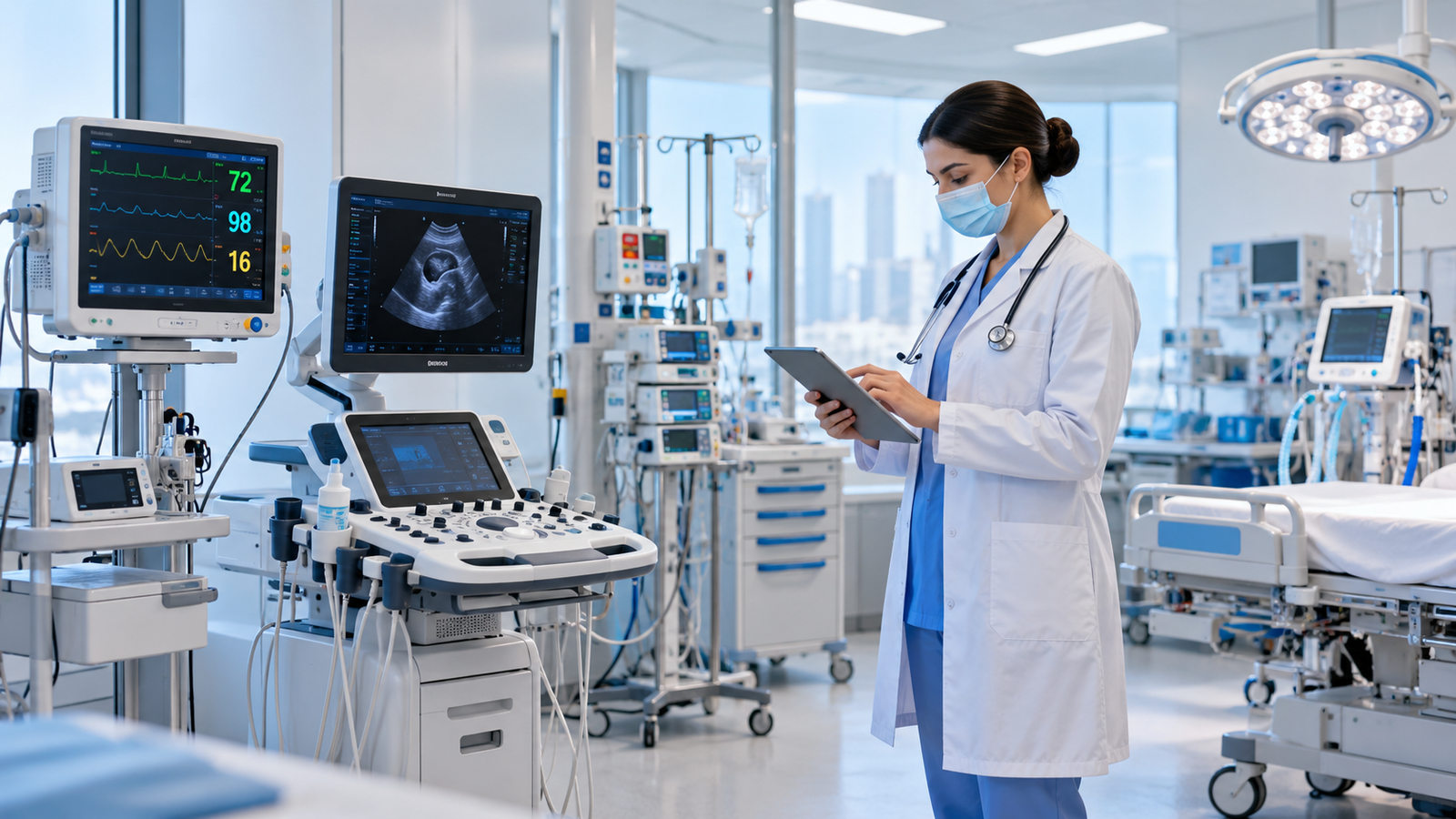
For hospitals, clinics, laboratories, and research facilities looking to strengthen their diagnostic and laboratory capabilities, ZabMed provides medical and diagnostic equipment to healthcare and laboratory facilities across the UAE. ZabMed’s equipment range includes laboratory and diagnostic instruments, with product guidance, installation assistance, and after-sales support.
The availability of appropriate equipment can support broader laboratory preparedness and diagnostic workflows; however, Ebola testing itself must always follow applicable biosafety requirements and be performed by appropriately trained professionals in suitably equipped facilities.
How Is Ebola Diagnosed?
Ebola cannot be reliably diagnosed based only on symptoms.
Because its early symptoms can resemble other infections, laboratory confirmation is essential when Ebola is suspected based on a person’s clinical condition and exposure history.
Diagnostic methods can include:
- Reverse transcription polymerase chain reaction, or RT-PCR
- Antigen detection
- Antibody-based tests such as ELISA
- Other specialized laboratory methods
WHO’s current diagnostic guidance emphasizes that rapid and appropriate laboratory testing is critical because some vaccines and therapeutics are specific to particular orthoebolavirus species.
Samples from suspected cases can present a significant biological hazard. They therefore need to be collected, transported, and processed according to appropriate biosafety procedures.
How Is Ebola Virus Disease Treated?
Treatment for Ebola has advanced significantly.
For patients with Ebola disease, early intensive supportive care can improve survival. Supportive care may include:
- Oral or intravenous fluids
- Electrolyte management
- Nutritional support
- Management of fever and pain
- Treatment of vomiting and diarrhea
- Monitoring and management of organ function
- Treatment of complications
- Treatment of other infections when clinically indicated
WHO describes optimized supportive care as a central component of Ebola management.
Specific Treatments for Ebola Virus Disease
For Ebola virus disease caused by Ebola virus, WHO recommends two monoclonal antibody treatments:
- mAb114 (ansuvimab)
- REGN-EB3 (Inmazeb)
These treatments are specifically relevant to Ebola virus disease caused by Ebola virus. They should not be described as universal treatments for every disease caused by an orthoebolavirus.
Treatment should be provided by appropriately trained healthcare teams following current clinical and public-health guidance.
Is There a Vaccine for Ebola?
Yes. A licensed vaccine is available for prevention of Ebola virus disease caused by Ebola virus.
Ervebo is a licensed and WHO-prequalified vaccine used particularly in outbreak-response strategies and for people at appropriate occupational risk.
However, the existence of an Ebola vaccine does not mean that every form of Ebola disease can currently be prevented through vaccination. Different orthoebolaviruses require different countermeasures, and approved vaccines and treatments are not currently available for every Ebola-causing virus.
How Can Ebola Be Prevented?
Preventing Ebola requires several measures working together.
Avoid Contact With Infected Bodily Fluids
People should avoid direct contact with the blood and bodily fluids of people who have suspected or confirmed Ebola.
Healthcare workers should use appropriate personal protective equipment and follow infection-prevention protocols. CDC guidance emphasizes the importance of appropriate PPE and infection-control measures when evaluating suspected Ebola cases.
Maintain Strong Infection-Control Practices
Healthcare facilities should have procedures for:
- Hand hygiene
- Appropriate PPE
- Patient isolation
- Environmental cleaning
- Safe injection practices
- Safe waste management
- Safe handling of laboratory specimens
- Appropriate use of dedicated equipment
CDC recommends isolating patients with possible orthoebolavirus infection and following appropriate infection-prevention measures, including PPE and dedicated equipment.
Avoid Contact With Infected Wildlife
In areas where Ebola outbreaks occur, people should avoid contact with sick or dead wild animals and potentially infected animal tissues.
WHO identifies fruit bats and certain other wildlife as possible sources of animal-to-human transmission.
Safe Burial Practices
People who die from Ebola can remain infectious. Direct physical contact with the body during burial can therefore create a transmission risk.
Safe and dignified burial practices are an important part of Ebola outbreak control.
What Should You Do If You Think You Were Exposed to Ebola?
If you believe you have had a significant exposure to Ebola, contact a healthcare or public-health service promptly.
Tell healthcare professionals about:
- Your recent travel history
- Where you traveled
- When you traveled
- Potential contact with an Ebola patient
- Possible contact with infected bodily fluids
- Possible exposure to wildlife
- When your symptoms began, if symptoms are present
Do not attempt to diagnose or treat Ebola at home.
WHO advises people with Ebola disease-like symptoms to seek care at a health facility rather than attempting to manage the illness at home.
Can Ebola Be Cured?
Ebola is treatable, and people can survive the disease.
However, it would be inaccurate to describe Ebola as a disease that can always be cured with a single treatment. Outcomes depend on the virus involved, disease severity, how quickly appropriate care is started, and access to supportive and specific treatments.
Early supportive care improves survival, while specific monoclonal antibody treatments are available for Ebola virus disease caused by Ebola virus.
This is why early recognition, laboratory confirmation, appropriate treatment, and well-prepared healthcare facilities are all important parts of Ebola care.
Ebola Recovery and Long-Term Health
People who recover from Ebola may experience ongoing health problems and may require medical and psychosocial support.
Ebola virus can also persist in certain immune-privileged sites in some survivors. Persistent virus in semen can have implications for sexual transmission, which is why survivors may receive specific follow-up guidance.
These considerations do not mean that casual contact with someone who has recovered from Ebola is inherently unsafe.
Ebola vs. Other Infections
Because Ebola can resemble several other infectious diseases, symptoms alone cannot reliably identify the cause.
| Feature | Ebola Disease | Influenza | COVID-19 |
|---|---|---|---|
| Main transmission | Mainly contact with infected bodily fluids | Primarily respiratory | Primarily respiratory |
| Incubation | 2–21 days | Usually shorter | Variable |
| Fever | Common | Common | Common |
| Headache | Common | Common | Can occur |
| Vomiting/diarrhea | Can occur | Sometimes | Sometimes |
| Bleeding | Can occur but is not present in every patient | Not typical | Not typical |
| Diagnosis | Requires appropriate laboratory testing | Clinical and/or laboratory | Clinical and/or laboratory |
| Specific vaccine | Available for Ebola virus disease | Available | Available |
The comparison is for general education only. A healthcare professional should assess anyone with a potentially serious infection.
Frequently Asked Questions About Ebola
What are the first symptoms of Ebola?
Early symptoms can include fever, fatigue, weakness, headache, muscle and joint pain, sore throat, loss of appetite, and general malaise.
How long does it take for Ebola symptoms to appear?
The incubation period is generally 2 to 21 days.
Does everyone with Ebola bleed?
No. Bleeding can occur, but it is not present in every person with Ebola disease.
Can Ebola spread through the air?
Ebola is primarily spread through direct contact with infected bodily fluids or contaminated materials rather than ordinary airborne transmission.
Can Ebola spread before symptoms?
People infected with Ebola are generally considered infectious only after symptoms develop.
Is there a vaccine for Ebola?
Yes. Ervebo is a licensed vaccine for prevention of Ebola virus disease caused by Ebola virus.
Is Ebola treatable?
Yes. Early intensive supportive care improves survival, and specific monoclonal antibody treatments are available for Ebola virus disease caused by Ebola virus.
Can people survive Ebola?
Yes. People can survive Ebola, particularly when they receive timely, appropriate supportive care and, when applicable, specific treatment.
What should I do if I think I have been exposed?
Contact an appropriate healthcare or public-health service promptly. Explain your exposure and travel history and follow professional instructions regarding testing, monitoring, and treatment.
When Should You Seek Medical Care?
Ebola is rare in many parts of the world, and symptoms such as fever, headache, fatigue, vomiting, and diarrhea can have many causes.
However, anyone who develops Ebola-compatible symptoms after a credible exposure should seek medical assessment promptly.
Early testing is important because Ebola can be difficult to distinguish from other infectious diseases based only on symptoms. WHO emphasizes that early testing and treatment can save lives and help prevent further transmission.
Healthcare facilities also need the appropriate diagnostic, laboratory, infection-control, and clinical resources to safely evaluate suspected cases.
Key Takeaways
Ebola virus disease is a rare but potentially severe viral infection. The most important points are:
- Ebola virus disease is caused by Ebola virus.
- Other orthoebolaviruses can cause different forms of Ebola disease.
- The incubation period is 2 to 21 days.
- Early symptoms can resemble other infections.
- Bleeding can occur but is not present in every patient.
- Ebola primarily spreads through contact with infected bodily fluids.
- People generally become infectious after symptoms develop.
- Laboratory testing is required to confirm infection.
- Early diagnosis allows healthcare teams to begin appropriate care and infection-control measures sooner.
- Early intensive supportive care improves survival.
- Specific monoclonal antibody treatments are available for Ebola virus disease caused by Ebola virus.
- Ervebo is an available vaccine for prevention of Ebola virus disease caused by Ebola virus.
- Healthcare facilities need trained staff, appropriate infection-control systems, diagnostic capacity, and suitably equipped laboratories to respond safely to suspected cases.
- Healthcare and laboratory facilities in the UAE looking for appropriate medical and laboratory equipment can explore ZabMed’s equipment and laboratory solutions.
Medical Disclaimer
This article is intended for general health education and does not replace professional medical advice, diagnosis, or treatment.
Ebola disease requires appropriate medical and public-health evaluation. Anyone who believes they have been exposed to Ebola or develops compatible symptoms following a relevant exposure should seek professional medical advice promptly and provide their healthcare provider with accurate travel and exposure information.