Choosing the right medical equipment for hospitals and clinics begins with understanding the type of healthcare facility you operate, the services you provide, and the patients you serve. A home care setup has different requirements from an outpatient clinic, diagnostic laboratory, intensive care unit (ICU), or full-service hospital.
For healthcare administrators, doctors, procurement managers, laboratory professionals, and biomedical engineers, equipment selection involves more than comparing prices. Clinical suitability, technical specifications, staff training, maintenance requirements, compatibility, and supplier support all influence purchasing decisions.
ZabMed supports healthcare equipment sourcing for hospitals, clinics, laboratories, and specialist facilities. This guide explains how to assess equipment requirements, plan purchases for different healthcare settings, and evaluate suppliers in the UAE.
Table of Contents
1. What Type of Healthcare Facility Are You Equipping?
Before preparing a purchasing list, define the facility’s intended services, expected patient volume, available infrastructure, and operational priorities. This helps create a practical equipment plan instead of purchasing items that may not be appropriate for the intended setting.
Home care setups
Home healthcare equipment requirements depend on the patient’s condition, the care plan prescribed by qualified healthcare professionals, and whether care is delivered by family members or trained staff.
Depending on the clinical need, equipment may include:
- Blood pressure monitors and thermometers
- Pulse oximeters, where clinically appropriate
- Mobility and rehabilitation aids
- Patient beds and positioning accessories
- Prescribed respiratory support equipment
- Other monitoring or assistive devices specified by the care team
Not every home requires all these devices. Equipment used for clinical monitoring or respiratory support should be selected according to professional guidance, manufacturer instructions, and the patient’s needs.
Clinics and outpatient centres
Clinics generally need equipment suited to their specialities, examination procedures, and patient volume. A general practice clinic may require a different combination of devices from a dental clinic, cardiology centre, or specialist diagnostic facility.
Depending on the services offered, a clinic may require:
- Examination couches and clinical furniture
- Basic diagnostic and patient monitoring equipment
- Electrocardiography (ECG) equipment for relevant services
- Ultrasound systems for appropriate diagnostic applications
- Sterilisation and disinfection equipment
- Medical consumables and examination accessories
For new clinics, equipment planning should be coordinated with room layouts, electrical requirements, infection prevention procedures, storage arrangements, and applicable licensing requirements.
Full hospitals and multispecialty facilities
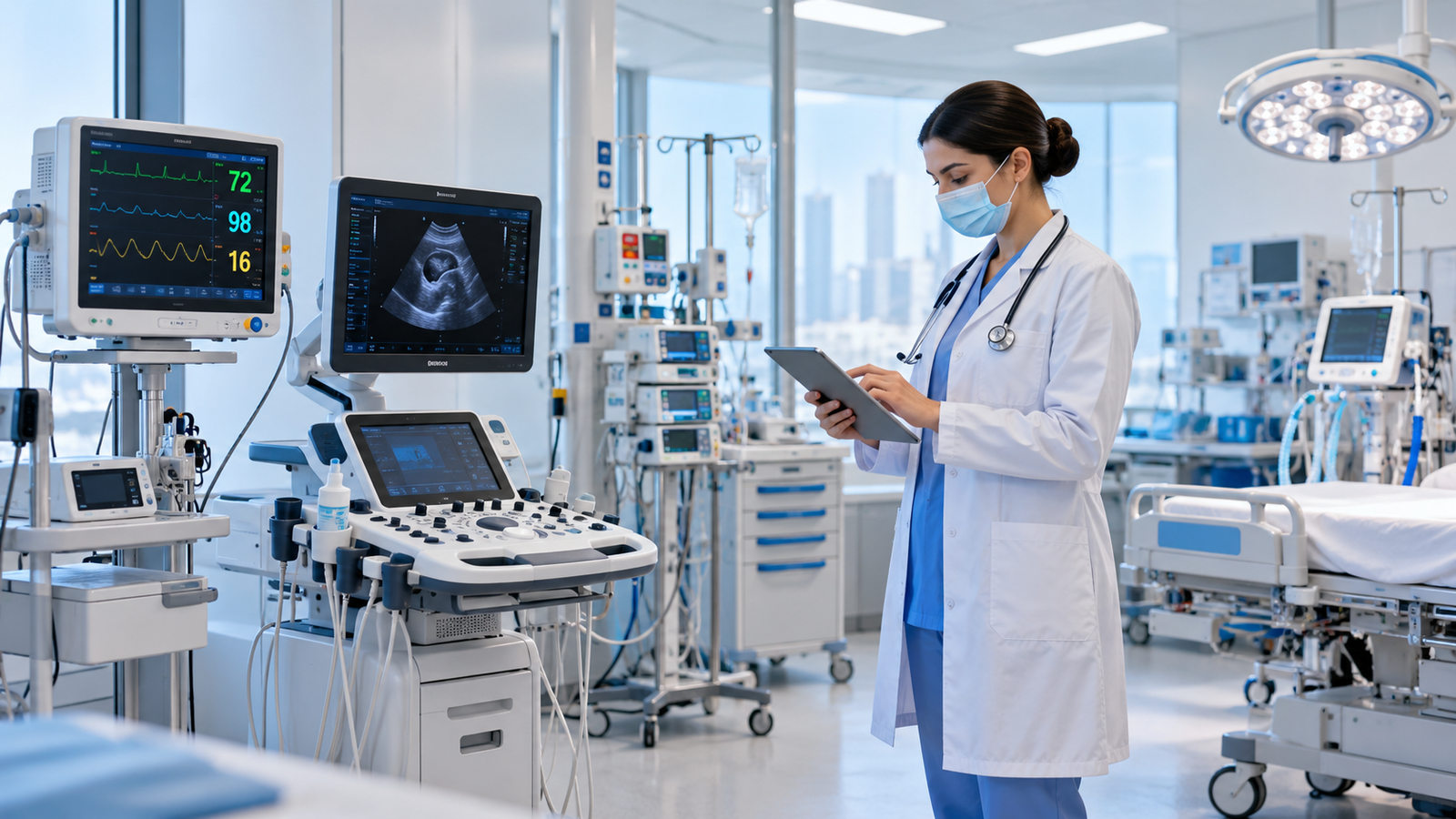
Hospitals usually require equipment across several departments, including emergency care, inpatient services, operating theatres, diagnostic imaging, laboratories, and critical care.
Depending on the hospital’s scope, procurement may cover:
- Patient monitoring systems
- ICU ventilators and critical care equipment
- Ultrasound and X-ray systems
- Laboratory analysers and sample preparation equipment
- Operating theatre tables and surgical equipment
- Sterilisation systems
- Hospital beds and patient support furniture
- Emergency and resuscitation equipment
Large projects should be planned department by department, with clinical teams, biomedical engineers, facilities managers, and procurement staff contributing to the specifications.
2. How to Choose Medical Equipment for Hospitals and Clinics
The right equipment categories depend on the facility’s services rather than the size of the building alone.
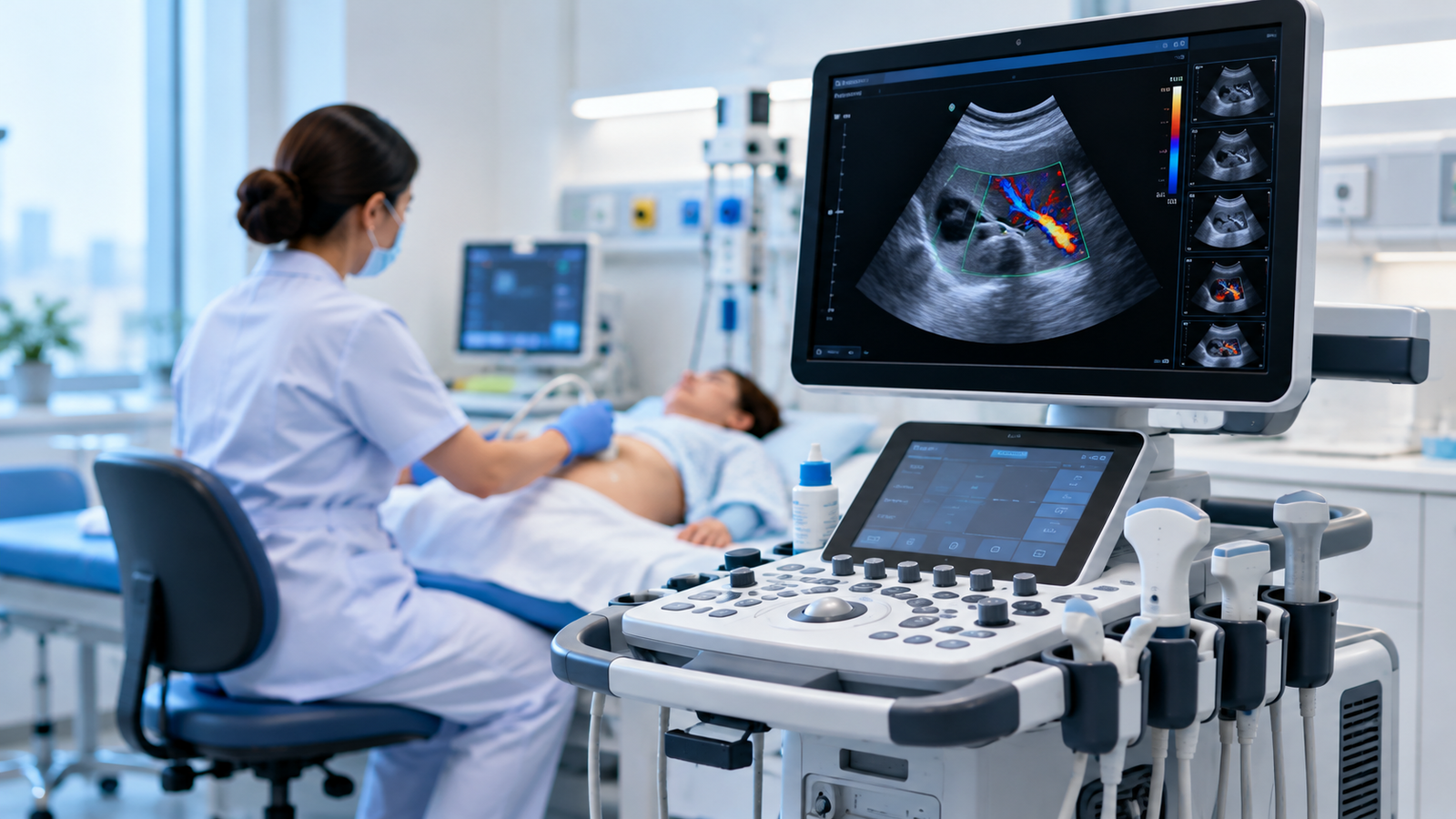
Diagnostic and imaging equipment
Diagnostic equipment supports the assessment and investigation of patients. Depending on the clinical service, this may include ultrasound systems, X-ray equipment, ECG machines, and other diagnostic devices.
Before selecting an imaging system, confirm its intended applications, image requirements, software capabilities, available accessories, installation conditions, and any applicable radiation safety requirements.
Explore ZabMed’s medical equipment catalogue to review the available equipment categories.
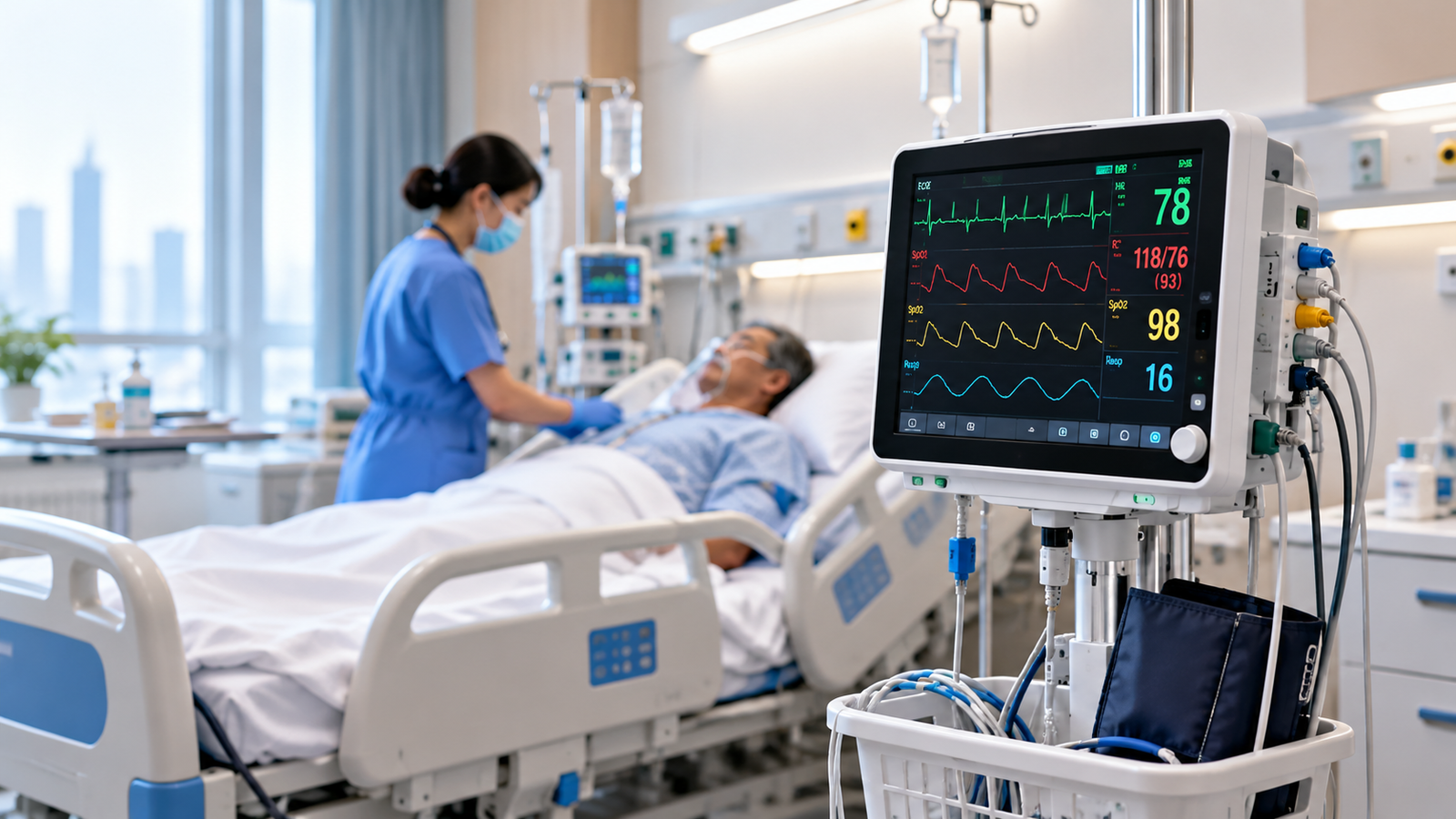
Patient monitoring equipment
Patient monitoring devices measure and display selected physiological parameters. The required monitoring capabilities vary according to the care environment and patient population.
When comparing systems, consider the parameters required, alarm configuration, display options, connectivity, accessories, and the availability of technical support.
An outpatient examination room may have different monitoring requirements from an emergency department or ICU. Procurement teams should document these differences before requesting quotations.
Laboratory equipment
Laboratories need equipment matched to their testing menu, sample volumes, workflows, and quality management procedures.
Depending on the laboratory’s scope, equipment may include:
- Centrifuges and laboratory balances
- Magnetic stirrers and water baths
- Hematology analysers
- Clinical chemistry analysers
- Electrolyte analysers
- Blood gas analysers
- Other sample preparation and analytical instruments
Equipment selection should also account for reagent compatibility, consumables, calibration requirements, quality control, service arrangements, and the technical capabilities of laboratory staff.
Visit ZabMed’s laboratory equipment category to explore relevant equipment options.
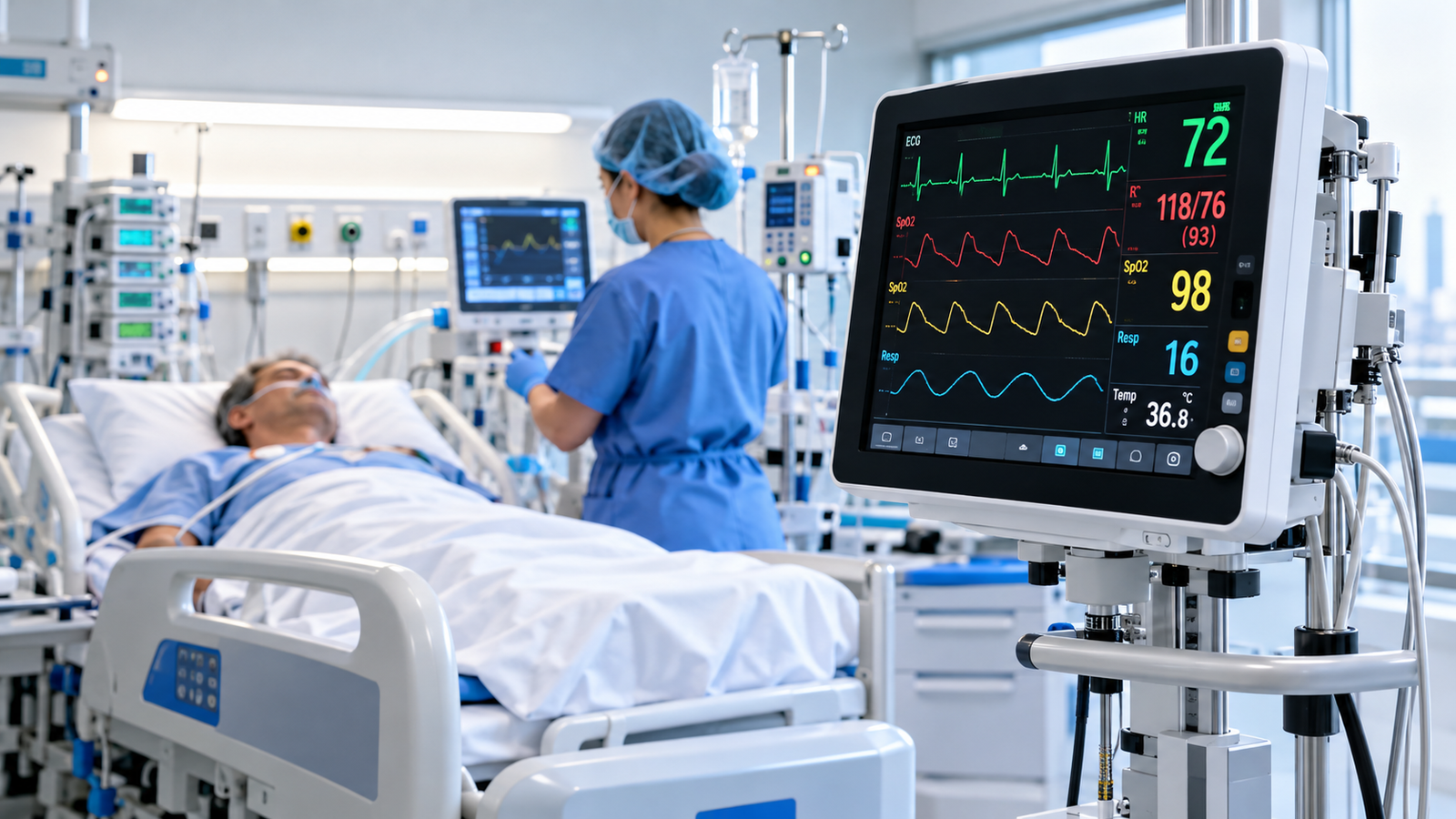
Critical care and ICU equipment
Intensive care units require equipment selected for the needs of critically ill patients and the clinical protocols followed by the hospital.
Depending on the ICU’s design and patient population, requirements may include ventilators, multiparameter patient monitors, infusion equipment, and other critical care devices.
Before procurement, assess interoperability, alarm management, backup power, gas supply infrastructure where required, cleaning procedures, staff training, preventive maintenance, and emergency support arrangements.
Surgical and operating theatre equipment
Operating theatres require equipment that supports the planned surgical procedures, clinical workflow, and infection prevention practices.
Potential requirements include operating tables, surgical lighting, electrosurgical equipment, and procedure-specific systems. The exact list should be developed with surgeons, anaesthesia teams, operating theatre staff, infection prevention professionals, and biomedical engineers.
Compatibility between equipment, accessories, room infrastructure, and existing systems should be confirmed before the order is finalised.
3. How to Determine Your Medical Equipment Requirements
A structured needs assessment can help healthcare organisations make more informed purchasing decisions.
Define the clinical purpose
List the services the facility will provide and identify the equipment required for each service. For example, a cardiology clinic may need ECG equipment and other diagnostic systems based on its planned procedures, while a clinical laboratory requires instruments suited to its testing menu.
Avoid selecting equipment simply because it is commonly used in other facilities. Confirm that each item supports a defined clinical or operational requirement.
Estimate capacity and workload
Consider the expected number of patients, procedures, tests, and operating hours. A high-volume laboratory may need different throughput capabilities from a small facility processing fewer samples.
Also assess whether equipment needs to operate continuously, support multiple users, or integrate with existing information systems.
Review space and infrastructure
Before purchasing equipment, check the installation location and its technical requirements. Depending on the device, these may include:
- Available floor space and access routes
- Electrical supply and backup power
- Ventilation and environmental conditions
- Water, drainage, or medical gas connections, where required
- Network connectivity
- Structural or shielding requirements for specific imaging installations
The World Health Organization (WHO) recommends considering technical specifications during medical device procurement because they affect implementation, infrastructure, resource planning, and equipment performance. Review the WHO guidance on medical device procurement and technical specifications.
Prepare a clear specification list
For each item, document the intended use, required performance, accessories, consumables, installation requirements, warranty expectations, and service needs.
This helps suppliers provide comparable quotations and reduces the risk of overlooking essential components.
4. What Should UAE Healthcare Buyers Check Before Purchasing?
Healthcare procurement in Dubai, Abu Dhabi, and elsewhere in the UAE should consider product suitability, documentation, installation, and the requirements applicable to the facility and device.
Check product documentation and regulatory requirements
Request the relevant product documentation, including the manufacturer’s information, technical specifications, instructions for use, and applicable regulatory documentation.
Verify the status of the specific medical device against the requirements of the relevant UAE authority. MOHAP provides an official registered medical product directory that can be consulted where applicable. Requirements may differ depending on the product and the competent authority, so buyers should confirm the correct process for their circumstances.
Do not assume that a supplier’s general credentials establish the regulatory status of every individual product.
Compare the total cost of ownership
The purchase price is only one part of the overall cost of medical equipment. Consider:
- Installation and commissioning
- Training and onboarding
- Consumables and replacement accessories
- Preventive maintenance and repairs
- Calibration or performance checks, where applicable
- Software licences or upgrades, if required
- Warranty conditions and spare parts
- Expected equipment lifespan and replacement planning
A lower initial price may not represent better value if ongoing costs or service requirements are substantially higher.
Confirm after-sales support
Ask who will handle installation, troubleshooting, maintenance, and repairs. Clarify service availability, response arrangements, warranty exclusions, and the sourcing of spare parts.
The WHO’s guidance on medical device inventory and maintenance management highlights the importance of managing equipment throughout its lifecycle, including inspection, training, maintenance, and eventual decommissioning.
Assess training and usability
Equipment must be appropriate for the staff who will operate it. Confirm that instructions are available, users can receive suitable training, and the device fits the facility’s established procedures.
For complex systems, include the clinical and technical teams in demonstrations and evaluations before making a final selection.
5. Common Medical Equipment Procurement Mistakes
Healthcare organisations can reduce avoidable procurement problems by addressing the following issues early.
Purchasing without a needs assessment: Buying equipment before confirming clinical requirements may result in unsuitable capabilities or unnecessary expenditure.
Ignoring installation requirements: Space, power, connectivity, environmental conditions, and other infrastructure needs should be checked before delivery.
Comparing only the purchase price: Maintenance, consumables, accessories, training, and downtime can affect the long-term cost of ownership.
Overlooking compatibility: Confirm that accessories, software, interfaces, and existing systems are compatible with the proposed equipment.
Failing to plan maintenance: Establish responsibilities for preventive maintenance, repairs, records, and replacement planning before equipment enters routine use.
Not checking documentation: Verify technical documents, warranty terms, applicable regulatory requirements, and the specific model being quoted.
6. How to Choose a Medical Equipment Supplier in the UAE
A suitable supplier should be able to understand the facility’s requirements and provide clear information about the products being proposed.
When evaluating suppliers, consider:
- Product range relevant to your departments
- Clear model specifications and manufacturer documentation
- Transparent quotations and delivery timelines
- Availability of accessories and consumables
- Installation and training arrangements, where required
- Warranty, maintenance, and technical support
- Experience handling the type of procurement involved
- Ability to support the facility’s applicable regulatory and documentation requirements
Ask suppliers to identify the exact model, included accessories, exclusions, delivery conditions, and service arrangements in their quotations.
For larger projects, share the equipment schedule and technical specifications with potential suppliers so their proposals can be compared against the same requirements.
7. How ZabMed Can Help B2B Healthcare Buyers
ZabMed supplies medical and diagnostic equipment to healthcare facilities, including hospitals, clinics, and laboratories. Its catalogue covers categories such as patient monitoring, ultrasound, X-ray and radiology, laboratory equipment, surgical and operating theatre equipment, and emergency and critical care equipment.
Healthcare procurement teams can use the ZabMed product catalogue to explore available categories and identify products relevant to their requirements.
For a more focused discussion, buyers can prepare a list of equipment, intended applications, preferred specifications, required quantities, and expected delivery timelines.
ZabMed’s team can then be contacted to discuss product availability and request a quotation. For laboratory-specific requirements, buyers can also review the laboratory equipment range.
To discuss a project or submit your equipment requirements, visit the ZabMed contact and enquiry page.
Product availability, exact specifications, regulatory status, installation, training, and after-sales arrangements should be confirmed for the particular products and project before purchase.
8. Frequently Asked Questions
What medical equipment is needed for a new clinic?
The equipment depends on the clinic’s speciality, planned procedures, patient volume, and applicable requirements. General examination equipment may be needed alongside diagnostic devices, clinical furniture, sterilisation equipment, and relevant consumables. A documented needs assessment should guide the final list.
What equipment is required for a full-service hospital?
A hospital may need equipment for emergency care, patient monitoring, critical care, diagnostic imaging, laboratories, operating theatres, inpatient services, and other specialist departments. The final selection depends on the hospital’s service scope, capacity, infrastructure, and clinical protocols.
What equipment is required for an ICU?
ICU equipment requirements depend on the patient population and services provided. They may include ventilators, patient monitors, infusion equipment, and other critical care devices. The ICU clinical team and biomedical engineering team should determine the required capabilities and infrastructure.
How do I choose a medical equipment supplier in the UAE?
Compare suppliers based on product suitability, technical documentation, regulatory considerations, quotation transparency, delivery timelines, warranty terms, and available support. Confirm the exact product model and all included components before placing an order.
Can one supplier provide equipment for multiple hospital departments?
Some suppliers offer equipment across several categories, allowing procurement teams to discuss requirements for different departments through one supplier. Buyers should verify the available product range, model specifications, delivery arrangements, and support for each item rather than assuming every requirement can be fulfilled.
What should I prepare before requesting a medical equipment quotation?
Prepare the facility type, department, intended use, required specifications, quantity, preferred brands or models where relevant, installation location, delivery deadline, and any required accessories or support services. Providing these details helps suppliers assess the request and prepare a more relevant quotation.
Conclusion
Selecting the right medical equipment for hospitals and clinics requires a clear understanding of clinical needs, specialist services, facility infrastructure, product documentation, and long-term support requirements.
Whether you are equipping a home care setup, opening a clinic, establishing a laboratory, or planning a hospital department, begin with a needs assessment and a clear equipment specification list. Compare suppliers on technical suitability and lifecycle support, not price alone.
Explore the ZabMed medical equipment catalogue or contact ZabMed to discuss your equipment requirements and request a quotation for your healthcare facility.